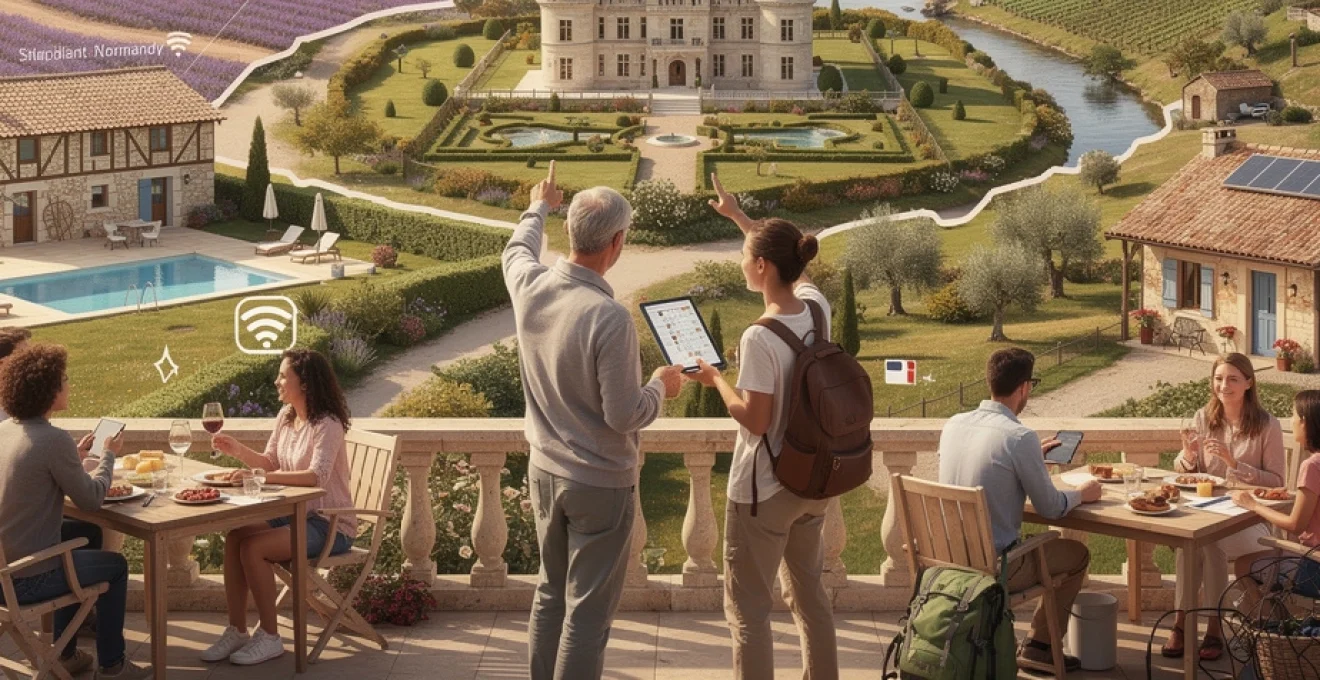
France stands as Europe’s premier destination for holiday cottage rentals, offering an unparalleled combination of cultural richness, architectural diversity, and regional authenticity. From the sun-drenched stone villas of Provence to the timber-framed houses of Normandy, the French gîte market represents one of the most sophisticated and well-regulated accommodation sectors in the world. The country’s 55,000 registered holiday properties serve millions of international guests annually, with the market generating over €2.8 billion in revenue each year. What sets French holiday cottages apart is not merely their quantity, but the meticulous attention to quality standards, cultural preservation, and guest experience that has evolved over decades of hospitality excellence.
Regional classification and geographical distribution of french holiday cottages
The French holiday cottage market demonstrates remarkable regional diversity, with each area offering distinct architectural styles, cultural experiences, and natural landscapes. Understanding these regional characteristics proves essential for both property owners and prospective guests seeking authentic French experiences. The distribution of holiday properties across France’s 13 regions reflects both tourism demand patterns and historical settlement characteristics, creating a complex tapestry of accommodation options that cater to diverse preferences and budgets.
Provence-alpes-côte d’azur gîte characteristics and market positioning
The Provence-Alpes-Côte d’Azur region commands the highest average rental rates in France, with premium properties achieving €300-500 per night during peak season. Traditional mas properties, characterised by their thick stone walls, terracotta roof tiles, and expansive courtyards, represent approximately 45% of the region’s holiday cottage inventory. These properties typically feature private swimming pools, with 78% of luxury gîtes offering this amenity compared to the national average of 32%.
The region’s cottage market benefits from exceptional year-round demand, achieving occupancy rates of 85% during high season and maintaining 60% occupancy through winter months. Lavender fields, vineyard proximity, and Mediterranean climate create powerful marketing advantages that justify premium pricing structures. Property sizes in Provence tend towards larger configurations, with 60% offering four or more bedrooms to accommodate extended families and group bookings.
Normandy and brittany coastal cottage inventory analysis
Northern coastal regions present a contrasting market dynamic, emphasising historical significance and natural beauty over luxury amenities. Normandy’s cottage portfolio consists largely of converted farmhouses and longères, traditional long houses that reflect the region’s agricultural heritage. These properties typically feature exposed timber beaming, stone fireplaces, and mature gardens, with 40% dating from the 17th century or earlier.
Brittany’s coastal cottage market demonstrates strong seasonal variation, with peak demand concentrated between June and September. The region’s 4,200 registered holiday properties achieve average occupancy rates of 72% during summer months, dropping to 25% in winter. Proximity to dramatic coastlines, Celtic cultural heritage, and exceptional seafood creates unique selling propositions that attract culturally motivated travellers seeking authentic regional experiences.
Loire valley Château-Style accommodation specifications
The Loire Valley’s holiday cottage market occupies a distinctive niche, offering properties with historical significance and architectural grandeur rarely found elsewhere. Approximately 15% of the region’s gîtes are located within or adjacent to historical châteaux, providing guests with access to formal gardens, wine cellars, and period architecture. These properties command premium rates averaging €250-400 per night, justified by their unique historical context and luxury amenities.
The region’s cottage inventory emphasises cultural tourism integration, with 68% of properties offering wine tasting experiences, château visits, or cycling tour packages. Property configurations tend towards mid-range sizes, with three to four bedrooms representing 55% of available accommodations. The Loire Valley achieves consistent year-round demand due to its proximity to Paris and appeal to cultural tourists seeking educational experiences.
Dordogne and périgord rural property portfolio assessment
The Dordogne region represents France’s most concentrated holiday cottage market, with one gîte for every 12 permanent residents in some communes. This saturation creates intense competition but also ensures exceptional value for money, with average rates
The Dordogne region represents France’s most concentrated holiday cottage market, with one gîte for every 12 permanent residents in some communes. This saturation creates intense competition but also ensures exceptional value for money, with average rates ranging from €110-180 per night for well-equipped three-bedroom properties in high season. Traditional périgourdine farmhouses with steeply pitched roofs and honey-coloured stone account for around 55% of the inventory, often complemented by converted barns and mill houses. Approximately 70% of Dordogne and Périgord holiday cottages include a private or shared pool, reflecting strong demand from family groups and multi-generational travellers. Despite its rural character, the region benefits from good accessibility via Bergerac and Brive airports, making it particularly attractive to UK and northern European guests seeking authentic countryside stays.
From a guest perspective, Dordogne and Périgord gîtes offer a high ratio of space to price, with generous gardens, outdoor dining areas, and proximity to rivers and walking trails. The market positions itself on gastronomy, prehistory, and slow tourism rather than pure luxury, with many owners integrating local food producers, markets, and wine routes into their visitor information. Occupancy levels typically peak in July and August at 80-90%, with a growing shoulder-season market driven by retirees and remote workers taking advantage of off-peak pricing. For future guests, the key to choosing in this region is balancing seclusion with access to amenities, as some of the most charming stone cottages can be located 15-20 minutes’ drive from the nearest supermarket or restaurant.
Alpine region chalet classifications in savoie and haute-savoie
In Savoie and Haute-Savoie, the holiday cottage market is dominated by Alpine chalets and apartments configured for both winter sports and summer mountain tourism. Around 65% of properties are located within recognised ski domains such as Les Trois Vallées, Espace Killy, and Portes du Soleil, where proximity to lifts and pistes becomes the primary pricing driver. Traditional chalets constructed in timber and stone, with deep balconies and pitched roofs designed to handle heavy snowfall, account for roughly half of the inventory, while the remainder consists of modern residences with shared facilities. During peak winter weeks, fully catered or luxury self-catering chalets can command prices upwards of €5000 per week, especially in internationally known resorts.
Unlike many coastal or rural regions, the Alpine holiday rental market follows a dual-season pattern, with high demand in both winter (December to March) and summer (July and August). Guests can expect a strong emphasis on practical features such as heated boot rooms, secure ski storage, underfloor heating, and high-efficiency insulation, alongside wellness amenities like saunas, hot tubs, or indoor pools in higher-end properties. Classification often reflects altitude and access: “ski-in, ski-out” chalets occupy the top pricing tier, while properties in valley villages or satellite hamlets appeal to guests prioritising authenticity and budget over direct slope access. For future guests, understanding the chalet’s exact location in relation to ski lifts, hiking trails, and village centres is as important as the number of bedrooms or presence of a fireplace.
Accommodation standards and classification systems for french gîtes
One of the distinctive strengths of the French holiday cottage market is its structured system of accommodation standards and labels. These frameworks help future guests assess the quality, comfort level, and reliability of a gîte before booking, even when properties vary widely in style and age. While classification is not always mandatory, many owners opt in because recognised labels such as Gîtes de France or Clévacances increase visibility and trust. For you as a guest, these systems function like a common language, turning subjective impressions of “charming” or “simple” into defined benchmarks for space, equipment, and services. Understanding how these rating schemes work can significantly reduce uncertainty when comparing holiday cottages in France across different regions.
Gîtes de france star rating methodology and criteria
Gîtes de France is the most established French holiday cottage network, founded in 1955 and now encompassing over 40,000 properties. Its classification system uses “épis” (ears of wheat) rather than stars, ranging from 1 to 5, based on a detailed grid of criteria covering comfort, facilities, environment, and welcome. A 1-épi gîte offers basic, functional accommodation in a simple setting, while a 5-épis property provides top-tier comfort, high-end equipment, and an exceptional setting or architectural character. Inspections are conducted regularly, and properties must meet minimum surface area requirements per person, as well as standards for heating, sanitation, safety, and kitchen facilities.
For future guests comparing holiday cottages in France, the Gîtes de France label offers a useful shorthand. A 3-épis cottage, for example, will normally include a well-equipped kitchen, modern bathroom, quality bedding, and an attractive environment, often with a garden or outdoor space. At 4 and 5 épis, you can expect additional amenities such as en-suite bathrooms, premium furnishings, landscaped grounds, and sometimes leisure facilities like pools or spas. Rather than thinking of the épis as a measure of luxury alone, it is more accurate to see them as a combination of comfort, character, and setting, helping you match a property to your expectations and budget.
Clévacances quality label requirements and inspection protocols
Clévacances is another major French quality label for holiday rentals, using a “keys” (clés) system from 1 to 5 to indicate comfort and equipment levels. All Clévacances properties must be individually inspected before receiving their label, with inspections repeated at least every three years to ensure ongoing compliance. The criteria cover structural safety, hygiene, energy performance, sound insulation, and accessibility, alongside guest-focused elements like the quality of bedding, furniture, and appliances. A 3-clé property typically equates to a comfortable, well-furnished gîte, while 4 and 5 clés signal superior comfort, stylish decoration, and often a privileged location.
Transparency is a key advantage of the Clévacances framework. Properties are required to provide accurate, detailed descriptions and photographs, with the label acting as an additional guarantee that what you see online will reflect reality on arrival. For guests who value consistent standards but still want independent, characterful accommodation, Clévacances gîtes offer a middle ground between anonymous hotel chains and completely unregulated rentals. If you are narrowing down options in a region you do not know well, filtering by the number of “keys” can be as practical as checking the number of bedrooms or distance to the nearest town.
Accueil paysan network standards for farm-based accommodations
For travellers seeking deeper rural immersion, the Accueil Paysan network focuses on farm-based and countryside accommodations centred on agricultural life and sustainable tourism. Rather than ranking properties on luxury, this label emphasises environmental responsibility, social engagement, and educational value. Member hosts are usually active farmers, producers, or rural residents committed to sharing their way of life with guests through farm visits, tastings, or workshops. Basic standards of comfort, safety, and hygiene still apply, but the key criteria relate to authenticity, respect for local ecosystems, and fair, transparent pricing.
Staying in an Accueil Paysan gîte is less about thread-count sheets and more about connection: you might help feed goats in the morning, learn about organic vegetable production in the afternoon, or dine on cheese made a few metres from your bedroom. For families with children or guests interested in agro-tourism, these holiday cottages in France offer a distinctive experience that typical resort areas cannot replicate. When you see the Accueil Paysan label, you can reasonably expect a simple but genuine environment where human interaction, local produce, and informal learning are central to the stay.
Fleurs de soleil classification framework for premium properties
Fleurs de Soleil is a smaller, selective label focusing predominantly on bed and breakfast (chambres d’hôtes) and upmarket rural stays, but some self-catering units are also included. As the name suggests, the classification uses “flowers” as its symbol, and membership is restricted to properties that meet both comfort and hospitality criteria. Inspections assess not only physical aspects such as room size, bathroom quality, and decorative coherence, but also the quality of the welcome, breakfast or table d’hôtes where applicable, and the overall guest experience. The aesthetic dimension is more strongly weighted here than in some other schemes, making this label particularly relevant if you prioritise stylish, intimate environments.
For future guests considering higher-end holiday cottages in France, the Fleurs de Soleil label can be a useful indicator that a property combines charm with professional standards. You are more likely to encounter curated interiors, landscaped gardens, and hosts who offer personalised recommendations and services. While this label is less widely known internationally than Gîtes de France, it occupies a valuable niche for those seeking boutique-style stays outside urban hotel contexts. If you enjoy design-focused accommodation and a warm human welcome, checking for Fleurs de Soleil properties in your chosen region can be a worthwhile strategy.
Legal framework and regulatory compliance for holiday rental properties
The legal environment for holiday cottages in France has evolved significantly over the last decade, particularly in high-demand cities and coastal areas. At a national level, owners must declare furnished tourist rentals (meublés de tourisme) to the local town hall, and in many communes an additional registration number is now compulsory for advertising. Properties intended for short-term rental must comply with safety regulations covering gas, electricity, smoke alarms, and pool security where applicable. In some major cities and resort areas, conversion of residential space into tourist accommodation is tightly controlled to protect long-term housing availability, although most rural gîtes are less affected by these restrictions.
From a guest’s perspective, regulatory compliance provides important safeguards. Registered holiday rentals are often subject to local tourist taxes (taxe de séjour), which you may see itemised on invoices, and hosts are required to provide clear rental contracts outlining payment terms, cancellation conditions, and house rules. Swimming pools must meet strict safety standards, typically involving alarms, barriers, or secure covers, which is especially reassuring for families with children. When booking, you can reasonably expect a legitimate gîte to supply an official registration or classification number on request; if in doubt, asking about compliance is a sensible step before confirming a long stay.
Taxation rules also shape how holiday cottages in France are operated. Owners generally declare rental income under specific regimes (micro-BIC or régime réel), with possible deductions for maintenance, utilities, and management fees. While these details concern the owner more than the guest, they indirectly impact pricing, minimum stay lengths, and availability patterns. In addition, some communes impose maximum annual rental days for primary residences, affecting the number of weeks a particular city apartment may be available. As regulations continue to adapt to tourism flows and digital platforms, guests benefit most by booking with owners or agencies who are transparent about their legal status and who provide clear documentation before arrival.
Seasonal pricing structures and market dynamics across french regions
Pricing for holiday cottages in France is closely tied to regional seasonality, school holidays, and local events. Coastal and southern regions such as Provence, the Côte d’Azur, and Languedoc typically follow a pronounced summer peak, with weekly rates sometimes doubling between May and August. In contrast, Alpine chalets reach their highest prices in February during ski season, while rural regions like Dordogne or Burgundy see more gradual variations throughout spring and autumn. Owners often publish three to five seasonal bands (low, mid, high, and sometimes very high or festive season), giving you a clear overview of how much flexibility in dates can save.
Market data from recent years shows increasing demand for shoulder-season stays, particularly May-June and September-October, as guests look to avoid crowds and benefit from milder temperatures. This shift has encouraged many hosts to keep pools open longer, improve heating, and promote off-season activities such as wine harvest visits, hiking, or Christmas markets. Dynamic pricing, familiar from hotels and airlines, is slowly entering the gîte sector via online platforms, but many independent owners still prefer stable, clearly defined tariffs. For you as a future guest, this means there is often room to find excellent value outside peak weeks, especially if you can travel midweek or book longer stays.
What practical strategies can you use when budgeting for a holiday cottage in France? Firstly, consider total trip cost rather than weekly rent alone; a slightly more expensive gîte within walking distance of shops and beaches may reduce dependence on a rental car. Secondly, look at energy and cleaning charges, which may be included in high season but billed separately at other times of year. Finally, watch for minimum stay requirements, which tend to be stricter in peak season (often one or two weeks, Saturday or Friday changeover) and more flexible off-season when shorter stays and custom arrival days become possible. Understanding these seasonal pricing structures helps you choose the right balance between budget, comfort, and timing.
Guest experience optimisation and cultural integration strategies
Beyond price and location, the most memorable holiday cottages in France are those that integrate local culture and design into the guest experience. Owners increasingly recognise that travellers are not only renting four walls and a bed, but a temporary way of life. As a result, many gîtes now prioritise authentic architectural details, regional cuisine, tailored activities, and multilingual support. Well-managed properties think of the guest journey not as a simple handover of keys, but as a curated sequence of touchpoints—from pre-arrival information and welcome packs to in-stay recommendations and post-visit follow-up. When you choose a gîte with this holistic approach, your stay is more likely to feel immersive and relaxed rather than transactional.
Traditional french architectural elements in cottage design
Architectural character is one of the defining attractions of holiday cottages in France. In Provence, for example, you may find thick stone walls, vaulted ceilings, and shaded pergolas that keep interiors cool in summer, while in Alsace brightly painted timber-framed houses line village streets like something from a storybook. Many owners refurbish properties with an eye to preserving original features such as exposed beams, terracotta tiles, stone fireplaces, or pigeonniers (dovecotes), using modern materials discreetly to enhance comfort without erasing history. This balance between heritage and convenience is a central theme: guests enjoy the sensation of sleeping in a centuries-old building while still benefitting from things like efficient heating, insulation, and contemporary bathrooms.
From a practical standpoint, traditional design elements often shape how you will use the space. Thick stone walls can moderate temperature but may also affect Wi-Fi coverage; mezzanines or narrow staircases can be charming yet less suitable for very young children or mobility-impaired travellers. When reading property descriptions, it can help to imagine how you live day to day: do you picture long evenings by an open fireplace, or sunny breakfasts on a balcony overlooking vineyards? By paying attention to architectural features as more than just decorative details, you can choose a gîte whose layout and atmosphere match your holiday rhythm.
Regional cuisine integration and kitchen facility standards
Self-catering is at the heart of the gîte concept, and kitchen facilities vary from basic but functional setups to gourmet spaces designed for serious cooking. In most well-rated holiday cottages in France, you can expect a full hob, oven or combination microwave, fridge-freezer, and a good selection of cookware and utensils. Higher-end properties may provide extras such as dishwashers, Nespresso machines, wine fridges, or outdoor kitchens with plancha grills. Given the importance of regional food—from Breton crêpes and Norman cider to Provençal tapenade and Dordogne duck confit—many owners curate their equipment and welcome hampers to encourage guests to engage with local produce.
How does this translate into your day-to-day holiday experience? Imagine walking back from a village market with seasonal vegetables, cheeses, and a bottle of regional wine; a well-equipped kitchen turns this simple shopping trip into a highlight of your stay. Some gîtes go further by providing recipe cards, recommendations for local producers, or partnerships with chefs offering in-house dinners. When evaluating a property, look beyond the quick mention of a “kitchenette” or “equipped kitchen” and check for photos or inventories that show you can cook comfortably. If food is central to your travel plans, a high-quality kitchen can be as important as a pool or a view.
Local activity coordination and tourism partnership networks
Many of the most successful holiday cottages in France operate as informal micro-hubs within their local tourism ecosystems. Instead of leaving guests to navigate endless online options, owners often build relationships with nearby wineries, bike rental shops, guides, and cultural sites. This might translate into discounted kayak hire on a local river, bespoke wine-tasting tours, or pre-booked tickets for popular attractions. In rural areas, where information in English may be limited, this kind of curated support can transform a good holiday into a seamless one, saving you time and reducing stress.
Some gîtes formalise these collaborations through printed guides, digital welcome books, or partnerships with regional tourism offices. Others offer to book activities on your behalf, particularly in busy ski resorts or during festival periods where advance planning is essential. Think of the owner or manager as a local concierge: they may not accompany you, but they can often point you toward experiences you would never have discovered alone. When contacting a property, do not hesitate to ask what kind of local network they have; their answer can be a strong indicator of how invested they are in your broader guest experience.
Multilingual guest support and cultural orientation services
As France welcomes millions of international visitors each year, multilingual support has become an important dimension of guest satisfaction. Many holiday cottage owners speak at least one foreign language, most commonly English, with German and Dutch also widespread in certain regions. Communication typically starts well before arrival, with detailed information packs, driving directions, and house manuals available in multiple languages. During your stay, you may find that hosts are happy to help with restaurant reservations, medical appointments, or basic translation issues, particularly in rural areas where English is less commonly spoken among service providers.
Cultural orientation goes beyond language, however. Thoughtful hosts explain local customs—from quiet hours and recycling rules to market days and tipping practices—so that you feel comfortable integrating into village life. This can be as simple as a note about when bakeries close or as involved as a guided walk on your first day to introduce you to the surroundings. Such guidance acts like a bridge between your expectations and the realities of daily life in France, reducing friction and misunderstandings. If you are nervous about navigating a foreign culture, choosing a gîte that clearly advertises multilingual support and detailed welcome information can offer valuable peace of mind.
Technology integration and digital management systems for modern gîtes
Digital tools now play a central role in how holiday cottages in France are marketed, managed, and experienced. Most guests begin their journey online, comparing properties via dedicated websites, specialist agencies, or large platforms, and owners increasingly rely on channel managers and booking systems to synchronise calendars and avoid double bookings. Automated confirmation emails, online payment gateways, and digital rental contracts not only streamline operations but also enhance security and transparency for guests. For you, this means faster responses, clearer documentation, and fewer administrative surprises when planning your trip.
Inside the gîtes themselves, technology is also reshaping expectations. Reliable high-speed internet has shifted from optional extra to near-essential, especially as remote work and “workation” stays become more common. Smart TVs, streaming services, and Bluetooth speakers allow you to blend home comforts with rural escapes, while smart thermostats or lighting systems can improve energy efficiency and comfort. Some properties adopt keyless entry or connected lockboxes, making late arrivals and self-check-in easier. Nevertheless, the best hosts use technology as a tool rather than a substitute for human contact, ensuring that digital convenience does not erase the personal welcome that defines the French gîte tradition.
Looking ahead, we can expect further integration of digital guest books, local recommendation apps, and even virtual reality tours to help you preview cottages and surroundings before booking. At the same time, data protection and privacy regulations (including GDPR) mean that owners must handle your personal information responsibly, with secure storage of passports, payment details, and contact data. As you evaluate potential holiday cottages in France, consider not only the charm of the stone walls and the view from the terrace, but also the quality of the digital experience—from booking to checkout. When both elements align, you gain the best of both worlds: timeless French atmosphere supported by modern, efficient technology.