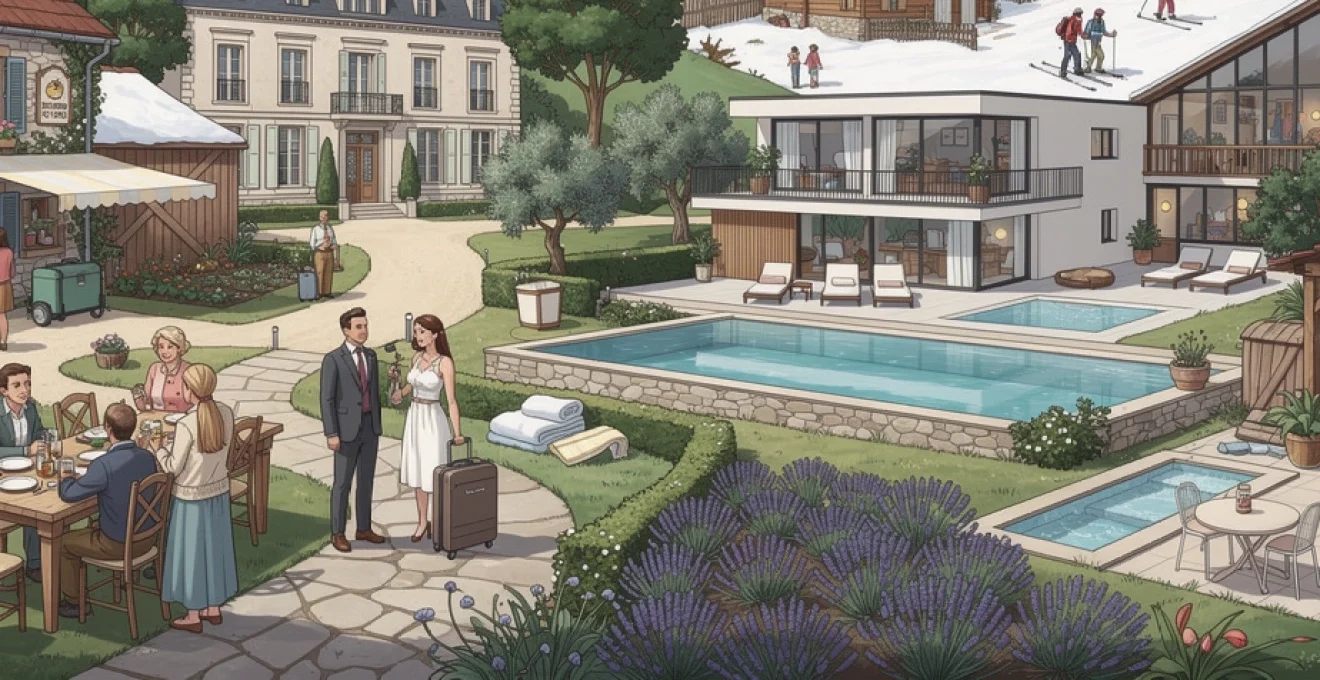
France stands as one of Europe’s most diverse holiday destinations, offering an extraordinary range of accommodation types that reflect centuries of architectural heritage and regional traditions. From rustic countryside gîtes nestled in rolling vineyards to opulent châteaux overlooking the Loire Valley, the French holiday rental market provides options for every taste, budget, and travel style. This remarkable diversity stems from France’s unique cultural landscape, where each region maintains distinct architectural characteristics shaped by local materials, climate, and historical influences.
The French approach to holiday accommodation emphasises authenticity and connection to place, whether you’re seeking a traditional stone farmhouse in Provence, a contemporary villa on the Côte d’Azur, or a charming chaumière along the Brittany coast. Understanding the various types of holiday properties available helps travellers make informed decisions that align with their expectations and enhance their French experience. The classification systems, regulatory frameworks, and quality standards that govern these accommodations ensure consistent service levels whilst preserving the distinctive character that makes each property type special.
Traditional french countryside properties: gîtes, chambres d’hôtes, and Ferme-Auberges
Traditional countryside accommodations represent the heart of rural French tourism, offering visitors authentic experiences rooted in agricultural heritage and local customs. These property types have evolved from working farms and village houses into carefully curated holiday experiences that maintain their original character whilst providing modern comfort and convenience.
Gîtes ruraux classification system and épis de france quality standards
Gîtes ruraux constitute the backbone of French self-catering accommodation, regulated under a comprehensive classification system that ensures quality and consistency across regions. The Épis de France rating system, administered by Gîtes de France, awards properties between one and five ears of corn symbols based on comfort levels, equipment standards, and service quality. This system evaluates over 100 criteria, including furniture quality, kitchen equipment, bathroom facilities, outdoor spaces, and overall presentation.
Properties earning five épis status feature premium amenities such as dishwashers, high-quality bedding, spacious living areas, and often include luxury touches like heated swimming pools or spa facilities. Three to four épis properties represent the market majority, offering comfortable accommodation with modern conveniences including washing machines, well-equipped kitchens, and private outdoor spaces. The classification system also considers environmental initiatives, with many gîtes now incorporating sustainable practices such as solar heating, rainwater collection, and organic garden produce.
The gîte rental market has experienced significant evolution, with traditional stone cottages being sensitively renovated to include contemporary features whilst preserving architectural authenticity. Modern gîtes frequently offer Wi-Fi connectivity, flat-screen televisions, and updated bathroom facilities, ensuring comfort levels that meet contemporary expectations without compromising rural charm.
Chambres d’hôtes regulatory framework under code du tourisme
Chambres d’hôtes, the French equivalent of bed and breakfast establishments, operate under specific regulations outlined in the Code du Tourisme. These properties must provide accommodation in the host’s primary residence, with a maximum of five guest rooms accommodating no more than fifteen people. The regulatory framework ensures quality standards through mandatory breakfast service, daily housekeeping, and host availability for guest assistance and local recommendations.
The appeal of chambres d’hôtes lies in their personalised service and cultural immersion opportunities. Hosts often share extensive local knowledge, recommend hidden gems, and facilitate authentic cultural experiences that independent travellers might otherwise miss. Many chambres d’hôtes specialise in specific themes, such as wine tourism in Burgundy, historical exploration in the Loire Valley, or culinary experiences in Périgord.
Recent trends show increasing sophistication in chambre d’hôtes offerings, with many properties developing spa services, cooking classes, or guided tours as additional revenue streams. The integration of digital marketing and online booking platforms has enhanced accessibility whilst maintaining the personal touch that defines this accommodation category.
Ferme-auberges: agricultural tourism integration with table d’hôte services
Ferme-auberges represent a unique fusion of accommodation and agricultural tourism, where working farms offer both lodging and restaurant services featuring farm-produced ingredients. These establishments must demonstrate active agricultural operations,
with a significant proportion of the food served at the table d’hôte coming directly from the farm or neighbouring producers. In most regions, local regulations and regional farm networks require a minimum percentage of home-produced ingredients, reinforcing the authenticity of the gastronomic offer. Guests typically enjoy fixed menus that showcase seasonal produce, often featuring traditional recipes passed down through generations. Accommodation ranges from simple, comfortable rooms within the farmhouse to self-contained annexes suitable for families or small groups.
For travellers interested in agritourism and farm-to-table dining, staying in a ferme-auberge provides a direct connection with rural life and local food systems. You might help feed animals in the morning, learn about cheese production in the afternoon, and enjoy a multi-course dinner built around the farm’s own vegetables, meat, and wines. This type of holiday house in France particularly appeals to families with children, food enthusiasts, and anyone looking to understand how French rural communities sustain themselves. Because of their popularity, especially in regions like Alsace, Auvergne, and the Pyrenees, advance reservations are highly recommended during high season.
Bienvenue à la ferme network: certified farm accommodation structures
The Bienvenue à la Ferme network plays a crucial role in structuring and promoting certified farm accommodation across France. Created by the Chambers of Agriculture, this national label brings together thousands of farmers who commit to strict quality charters regarding hospitality, food production, environmental practices, and guest safety. Properties displaying the Bienvenue à la Ferme logo can include gîtes, chambres d’hôtes, fermes-auberges, on-farm camping areas, and educational farms, all centred around genuine agricultural activity.
For you as a traveller, the label acts like a reliable “short-cut” through the complexity of rural offers, making it easier to choose a holiday house in France that meets clear standards. Member farms are inspected regularly and must provide transparent information about their activities, facilities, and services. Many offer additional experiences such as farm tours, tastings, children’s workshops, or direct sales of products like honey, cheese, charcuterie, and wine. This integrated approach helps sustain family farms economically while giving visitors a structured way to enjoy immersive rural breaks.
From a practical standpoint, using the Bienvenue à la Ferme network can simplify your planning if you want to combine several farm stays across different regions. Online directories and regional brochures allow you to filter by accommodation type, agricultural activity, or available services, such as on-site dining or accessibility for guests with reduced mobility. In an era when sustainable travel is increasingly important, these certified farm accommodations align well with travellers seeking lower-impact holidays and authentic local interactions.
Luxury vacation rentals: châteaux, maisons de maître, and premium villas
At the opposite end of the spectrum from rustic farm stays, luxury vacation rentals in France showcase the country’s grand architectural heritage and high-end hospitality culture. These prestigious holiday houses in France include private châteaux, elegant maisons de maître, and contemporary villas designed for discerning guests who value privacy, space, and bespoke services. While often associated with special occasions such as weddings, anniversaries, or corporate retreats, they are increasingly popular for extended family holidays and multi-generational gatherings.
Luxury rentals are typically managed by specialist agencies or dedicated property managers who understand the expectations of international travellers. High standards of maintenance, professional housekeeping, and optional concierge services distinguish these properties from standard self-catering rentals. When you book a château in the Loire or a designer villa on the Côte d’Azur, you are not simply renting a house; you are buying into a curated experience that blends French art de vivre with modern comfort. This segment of the holiday rental market has grown steadily over the past decade, driven by global demand for exclusive, private stays.
Historic château conversions in loire valley and périgord regions
The Loire Valley and Périgord regions are renowned for their abundance of historic châteaux, many of which have been sensitively converted into high-end holiday rentals. These château properties often date from the Renaissance or classical periods and may be protected as historical monuments, which influences how renovations are carried out. Thick stone walls, grand staircases, and original fireplaces coexist with modern comforts such as underfloor heating, professional-grade kitchens, and heated pools. The result is a unique blend of heritage and luxury that few other types of holiday houses in France can match.
For travellers, staying in a château can feel like stepping into a period film, but with 21st‑century amenities discreetly integrated. You might sleep in a former noble suite with painted ceilings, then have breakfast overlooking formal gardens inspired by Le Nôtre. Many château rentals offer extensive grounds, including woodland, vineyards, or riverside walks, creating a private estate atmosphere that is ideal for groups. Because these buildings are large and maintenance-intensive, weekly rental rates can appear high at first glance, but divided between 10–20 guests they often become competitive with upscale hotels.
When considering a château rental in the Loire or Périgord, it is wise to look beyond the decorative photos and evaluate practical aspects: heating policies in shoulder seasons, accessibility for older guests, and the layout of bedrooms versus bathrooms. Some properties retain more traditional configurations, with interconnecting rooms or upper floors accessed only by stairs. Asking detailed questions before booking helps ensure that the romantic dream of château living aligns with your group’s everyday needs and mobility. In this sense, choosing a château is like choosing a classic car: it offers style and character, but you need to understand how it drives.
Maisons de maître: bourgeois architecture in provence and languedoc
Maisons de maître—literally “master’s houses”—represent an important category of upscale holiday houses in France, especially in southern regions like Provence and Languedoc. These elegant residences were historically built for vineyard owners, lawyers, or local dignitaries, often in village or small-town settings rather than isolated countryside. Architectural features typically include symmetrical facades, tall windows with shutters, decorative wrought-iron balconies, and grand entrance halls. Inside, you will often find high ceilings, original tiled floors, and generous reception rooms that lend themselves well to social gatherings.
For modern holidaymakers, a maison de maître offers an attractive balance between character and practicality. Many have been refurbished with contemporary kitchens, additional bathrooms, and landscaped gardens that may include secluded courtyards or small pools. Because they are frequently situated within walking distance of markets, cafés, and restaurants, they appeal to guests who prefer to minimise driving and enjoy a more urban or village-based lifestyle. If you like the idea of stepping out each morning to buy fresh bread from the local boulangerie, this property type is particularly well suited.
Compared to château rentals, maisons de maître generally accommodate smaller groups—often between six and twelve people—making them ideal for extended families or two to three couples travelling together. Pricing can be more accessible while still delivering an upscale experience rooted in French bourgeois tradition. When choosing such a property, pay attention to outdoor space and orientation; in sun-drenched regions like Provence, shaded terraces and mature trees can be just as valuable as air conditioning. As with all period houses, insulation and cooling systems vary, so it is worth checking how the property performs during peak summer heat.
Contemporary villa developments on côte d’azur and corsica
On the Mediterranean coast and on Corsica, contemporary villas represent the cutting-edge of luxury holiday houses in France. These properties often feature clean architectural lines, floor-to-ceiling windows, and open-plan living spaces designed to maximise sea views and outdoor living. Infinity pools, rooftop terraces, and landscaped gardens with native Mediterranean plants are common, along with high-spec technology such as home automation systems, integrated sound, and advanced security. Many new-build villas are positioned in private domains or gated communities for enhanced privacy.
For you as a guest, the main advantage of contemporary villas lies in their functional design and climate responsiveness. Large sliding doors create seamless transitions between indoor and outdoor areas, encouraging al fresco dining and relaxed socialising around the pool. Energy-efficient glazing, modern insulation, and reversible air-conditioning systems help maintain comfortable temperatures even during the hottest months. If your priority is uncomplicated comfort with minimal quirks—unlike some historic properties—a contemporary villa may be the best holiday home format for your stay in France.
On the Côte d’Azur and Corsica, proximity to beaches, marinas, and vibrant coastal towns greatly influences rental value. Villas within walking distance of the sea or with direct beach access command premium prices, especially in July and August. When comparing options, it can be useful to map precise locations and driving times to amenities; a villa marketed as “near Saint-Tropez” may in reality require a considerable commute in peak traffic. As demand for this segment continues to grow, earlier booking—sometimes up to a year ahead—is increasingly important for securing the most sought-after properties.
Concierge services and property management for High-End rentals
High-end holiday houses in France are often accompanied by professional concierge and property management services designed to deliver a seamless stay. At a basic level, this might include pre-arrival shopping, mid-week cleaning, and pool maintenance, but many luxury rentals now offer much more extensive service menus. Private chefs, drivers, childcare, spa therapists, and local guides can be arranged, turning the property into a fully serviced private retreat that rivals five-star hotels. For guests, this means you can focus on enjoying your time rather than managing logistics.
Behind the scenes, dedicated property managers coordinate staff, handle maintenance issues, and ensure compliance with safety and regulatory standards. This professional oversight is especially important for larger properties with pools, spas, or extensive grounds, where regular inspections and servicing are essential. Many agencies now offer digital welcome books and concierge apps where you can book services, request restaurant recommendations, or download practical information about the house. This digital layer complements the personal touch, providing quick answers while retaining human support when needed.
When evaluating a luxury rental, it is wise to clarify exactly which services are included in the base price and which are optional extras. Do daily housekeeping or breakfast preparation come as standard, or are they available on request? Is there a 24/7 emergency contact in case of technical issues? Asking these questions in advance helps avoid misunderstandings and ensures the service level matches your expectations. In essence, the difference between a simple upscale property and a true luxury rental often lies less in the marble bathrooms and more in the invisible framework of support that surrounds your stay.
Coastal holiday accommodations: from brittany longères to mediterranean mas
France’s extensive coastline—from the wild Atlantic shores to the sun-soaked Mediterranean—offers an impressive variety of coastal holiday houses. Architectural styles, building materials, and typical layouts shift noticeably as you move from region to region, reflecting centuries of maritime history and local climate conditions. Whether you dream of a stone cottage overlooking windswept cliffs in Brittany or a sun-baked mas among olive groves near the Riviera, coastal rentals give you direct access to beaches, seafood markets, and nautical activities.
Coastal holiday accommodation also covers a wide regulatory spectrum, from privately owned homes rented seasonally to purpose-built résidences de tourisme governed by specific tourism laws. Understanding these distinctions can help you choose the right type of holiday home in France according to your expectations for services, facilities, and independence. As coastal regions remain among the most popular in the country, early planning and careful comparison of property types can make a significant difference to both your budget and your experience.
Breton stone cottages: longères and chaumières along atlantic coast
In Brittany, traditional coastal holiday houses often take the form of longères and chaumières, elongated stone cottages sometimes topped with distinctive thatched roofs. Originally designed as rural family homes and farm buildings aligned along a single axis, many have been converted into charming gîtes or second homes. Thick granite walls provide natural insulation against Atlantic winds, while low-slung silhouettes help the buildings hug the landscape. Interiors typically blend exposed beams and stonework with modern comforts such as efficient heating systems and updated bathrooms.
For visitors, staying in a Breton longère or chaumière offers a strong sense of place, especially when combined with coastal walking routes, lighthouses, and small fishing ports. Many properties lie within cycling distance of beaches or crêperies, making them ideal for families seeking a relaxed, outdoorsy holiday. Because some traditional cottages were relatively modest in size, pay attention to ceiling heights, staircases, and room distribution if you are travelling with very young children or older guests. Modern renovations often improve light and circulation, but the underlying structure still reflects its historical origins.
From a practical standpoint, these Atlantic coast rentals are well suited for shoulder-season stays, when sea temperatures may be cooler but coastal paths, markets, and heritage sites are quieter. Good heating and sometimes wood-burning stoves ensure comfort during spring or autumn storms, turning the cottage into a cosy retreat after days spent exploring. As with many character properties, parking, garden size, and proximity to neighbours can vary, so it is worth reviewing site plans or satellite imagery if privacy and outdoor space are priorities for your group.
Mediterranean mas and bastides in var and Alpes-Maritimes departments
On the Mediterranean side, particularly in the Var and Alpes-Maritimes departments, traditional rural houses are known as mas and bastides. A mas is typically a former farmhouse built in stone or rendered masonry, often oriented to protect against the Mistral wind and to make the most of sunlight. Bastides tend to be larger, more formal country residences that may have served as seasonal homes for urban elites or owners of agricultural estates. Today, both types of buildings are highly sought after as holiday houses in France, prized for their thick walls, terracotta roofs, and shaded terraces.
Inside, renovated mas and bastides usually combine rustic materials—stone floors, wooden beams, limewashed walls—with tasteful modern upgrades. Open-plan kitchens, ensuite bathrooms, and landscaped gardens with pools transform them into comfortable bases for exploring the Riviera hinterland. Olive trees, cypress-lined driveways, and views of vineyards or distant hills contribute to an atmosphere that many travellers associate with the quintessential Provençal experience. Because demand is strong, particularly within easy reach of coastal hotspots like Cannes or Saint-Tropez, these properties often command premium weekly rates in summer.
When selecting a mas or bastide, consider the balance between seclusion and accessibility. Secluded hillside locations offer peace and panoramic views but may involve narrow access roads and longer drives to shops or beaches. Conversely, properties closer to villages can provide easier access to amenities but less privacy. Heat management is another consideration: while thick walls help maintain cooler interiors, air conditioning is not always standard in older buildings. If you plan a stay in August, confirming the presence and scope of cooling systems can prevent uncomfortable surprises.
Seaside apartments and résidences de tourisme regulations
Along both the Atlantic and Mediterranean coasts, seaside apartments and serviced complexes known as résidences de tourisme form a significant part of the holiday rental offer. These purpose-built developments are governed by specific regulations under the Code du Tourisme, which define minimum equipment standards, reception services, and classification levels (from one to five stars). Units are typically self-contained apartments with kitchenettes or full kitchens, complemented by shared facilities such as pools, kids’ clubs, laundry rooms, and sometimes spas or restaurants.
For travellers who prefer predictable services and on-site amenities, résidences de tourisme can be an attractive alternative to privately owned holiday homes. They often occupy prime coastal locations near beaches and marinas, and they can be especially practical for families seeking structured activities for children. However, because ownership and management structures can be complex—individual investors may own units while a management company operates the residence—service quality can vary. Reading recent reviews and checking the current star rating can provide a clearer picture than marketing photos alone.
It is useful to distinguish these regulated residences from standard private apartments in coastal towns, which fall under the broader category of meublés de tourisme or short-term rentals. While both options provide self-catering accommodation near the sea, the former emphasise hotel-style services and shared facilities, whereas the latter offer more individuality but fewer built-in services. When choosing between them, ask yourself how important daily reception, on-site maintenance, and organised activities are for your group. Your answer will guide you towards either a more independent or a more structured holiday framework.
Thalassotherapy integration with coastal rental properties
France has a long-standing tradition of thalassothérapie—seawater-based spa treatments—and many coastal resorts have developed sophisticated wellness centres around this concept. While these centres are often attached to hotels, an increasing number of holidaymakers choose to rent nearby holiday houses or apartments and book treatment programmes separately. This approach allows you to combine the privacy and flexibility of self-catering accommodation with access to professional wellness facilities, pools, and medical-supervised treatments using marine products.
In practical terms, this might mean renting a family villa within walking distance of a thalasso centre in areas like Brittany, Normandy, or the Atlantic coast near Biarritz. You can schedule half-day or full-day treatments—hydrotherapy baths, seaweed wraps, massages—while still returning to your own kitchen and living room in the evening. For longer stays, some centres offer multi-day or multi-week programmes targeting stress reduction, post-sport recovery, or general fitness. This makes coastal holiday houses in France particularly appealing for travellers seeking to combine rest, health, and seaside scenery.
When planning a thalassotherapy-focused holiday, it is wise to coordinate accommodation and treatment bookings early, especially during school holidays and peak health-tourism seasons. Check opening calendars and package details, as some facilities operate reduced schedules outside high season. You may also want to verify practical details such as parking availability near the centre and public transport options if not everyone in your group will use a car. In effect, your holiday home becomes a private annex to the spa, giving you more space and autonomy than a typical hotel room while you pursue your wellness goals.
Mountain chalets and alpine accommodations across french ski regions
France’s mountain regions—from the northern Alps and Mont-Blanc massif to the Pyrenees and Jura—offer a distinct set of holiday houses adapted to snow, altitude, and outdoor sports. The archetypal property is the wooden chalet, but in reality you will find a spectrum ranging from traditional stone-and-timber farmhouses to modern, energy-efficient lodges integrated into ski resorts. Many of these accommodations operate year-round, welcoming skiers in winter and hikers, cyclists, and paragliders in summer. This dual-season use shapes their design, with features like boot rooms, fireplaces, and balconies all playing important roles.
In major ski areas such as the Trois Vallées, Espace Killy, or Paradiski, chalets are often clustered in purpose-built resorts with direct access to lifts and pistes. Here, you can choose between self-catered chalets and fully catered options where staff prepare meals and handle housekeeping. In quieter valleys or traditional villages, converted barns and old stone houses provide more rustic alternatives, sometimes with easier access to year-round local life but requiring short drives or shuttle buses to ski areas. Your choice depends largely on whether you prioritise doorstep skiing or a more authentic village atmosphere.
Modern alpine chalets increasingly incorporate sustainability features such as high-performance insulation, biomass or geothermal heating, and triple-glazed windows. This not only improves comfort but also reduces energy costs in environments where winter temperatures can plunge well below freezing. For families and groups, layouts typically emphasise communal living spaces around an open fire or stove, alongside multiple bedrooms and bathrooms to facilitate post-ski routines. When evaluating a chalet, pay close attention to storage (for skis, boots, and gear), drying facilities, and the proximity to lifts or shuttle stops, as these details can significantly impact day-to-day convenience.
Urban holiday apartments: parisian haussmanian flats to lyon silk district lofts
Urban holiday apartments represent another major category of holiday houses in France, offering an immersive way to experience cities such as Paris, Lyon, Bordeaux, Marseille, or Toulouse. Rather than staying in a hotel, you can rent a self-contained apartment in a residential neighbourhood, giving you space to cook, work, and relax at your own pace. This style of accommodation suits longer stays particularly well, whether you are on a workation, a family city break, or a slow-travel exploration of French culture.
In Paris, many short-term rentals occupy classic Haussmannian buildings characterised by stone facades, wrought-iron balconies, and high ceilings. Inside, you may find original parquet floors, mouldings, and fireplaces, sometimes paired with contemporary kitchens and bathrooms. In contrast, cities like Lyon offer distinctive loft-style apartments in former silk workshops, especially in the Croix-Rousse district, where high ceilings and large windows once accommodated weaving looms. Marseille and Bordeaux blend 18th- and 19th‑century townhouses with modern apartment complexes along redeveloped waterfronts, giving you a wide range of urban aesthetics to choose from.
Urban holiday rentals are subject to increasingly strict regulations, particularly in Paris and other high-demand cities, where local authorities seek to balance tourism with residential needs. As a traveller, this means you should favour legally declared meublés de tourisme that comply with local rules on registration, taxation, and building codes. Legitimate hosts will usually display a registration number in their listing and provide clear information about house rules, check‑in procedures, and safety equipment. Beyond legality, practical considerations—noise levels, elevator access, and proximity to public transport—will greatly shape your daily experience in the city.
Legal classification framework: meublés de tourisme vs locations saisonnières
Behind the diversity of holiday houses in France lies a complex but important legal framework that distinguishes between different types of furnished tourist accommodation. Two key concepts are meublés de tourisme and locations saisonnières, terms that are sometimes used interchangeably in everyday language but have distinct implications under French law. Understanding the basics can help you navigate listings more confidently and recognise when a property is operating within the formal tourism classification system.
Meublés de tourisme are furnished villas, apartments, or studios offered to transient clients for exclusive use, on a short-term basis, without the provision of hotel-style services. Owners can voluntarily submit these properties for official classification—from one to five stars—based on criteria such as comfort, equipment, accessibility, and environmental performance. Classified properties benefit from clear quality benchmarks and may receive certain fiscal advantages, while guests gain more transparency regarding service levels. The classification is granted for a fixed period (usually five years) and must then be renewed following inspection.
The broader term location saisonnière simply refers to a seasonal rental contract, regardless of whether the property is officially classified. Many holiday homes in France operate as locations saisonnières without star ratings, particularly in rural or coastal areas where owners rely on reputation and reviews rather than formal certification. These rentals must still comply with general safety and housing regulations, but they do not follow the specific criteria of the star system. For you as a guest, this means that the absence of classification is not necessarily negative, but you should pay closer attention to descriptions, photos, and independent reviews to gauge quality.
Across France, local municipalities—especially in large cities and tourist hotspots—have introduced additional requirements such as registration numbers, tourist taxes, and limits on the number of nights a primary residence can be rented. Short-term urban rentals are often subject to different rules than countryside gîtes or mountain chalets. When you book a holiday home, checking for a displayed registration number and clear information about tourist tax can be a simple way to verify that the property is operating transparently. Ultimately, while the legal distinctions may feel technical, they exist to create a more balanced and trustworthy holiday rental market for both hosts and guests.