# Discover Why Normandy, the most english part of France Appeals to So Many Visitors
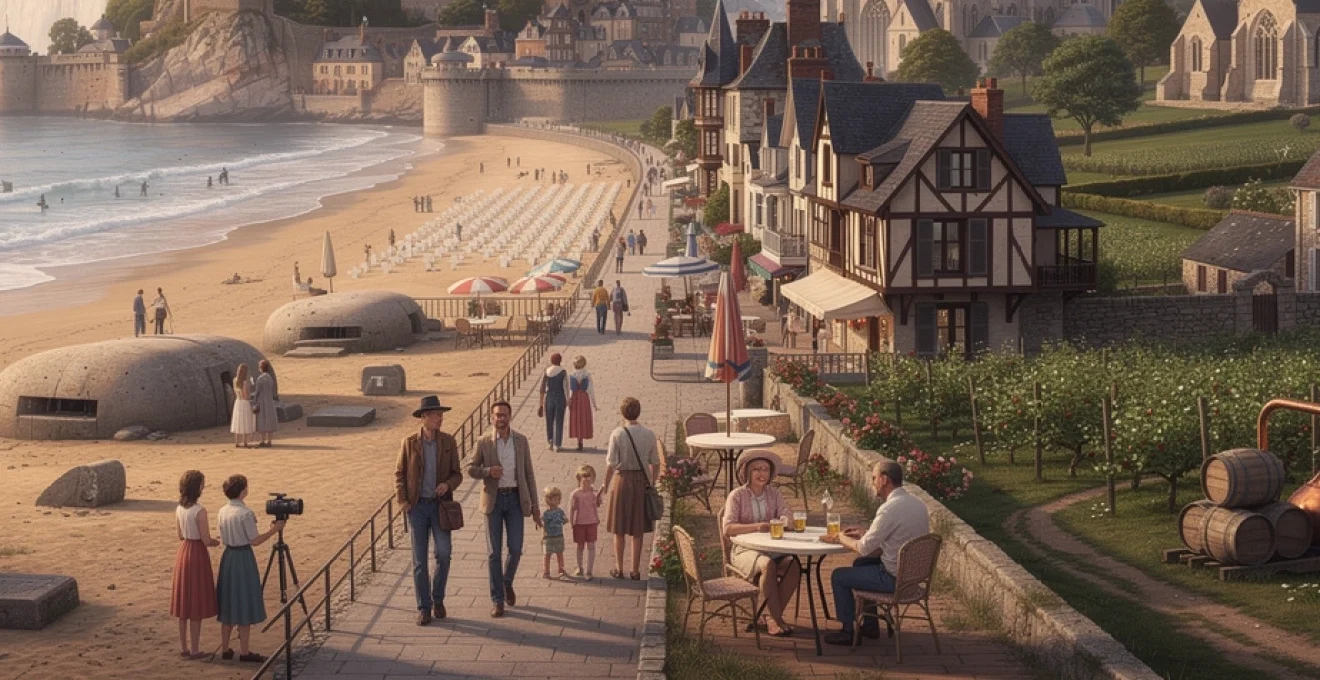
Normandy stands as a fascinating paradox within France—a region where French identity intertwines seamlessly with Anglo-Saxon heritage, creating a unique cultural landscape that resonates deeply with English-speaking visitors. From the moment you cross the Channel, whether by ferry from Portsmouth or by driving through the Eurotunnel, you’ll notice something remarkable: Normandy feels simultaneously foreign and familiar. The rolling green countryside mirrors the pastoral beauty of the English shires, half-timbered houses evoke Tudor architecture, and the historical connections run so deep that separating Norman from English heritage becomes nearly impossible. This extraordinary blend of shared history, from William the Conqueror’s invasion to the D-Day landings, coupled with architectural similarities and enduring cultural ties, has transformed Normandy into what many consider the most English corner of France.
The norman conquest legacy: how 1066 shaped Cross-Channel cultural identity
The year 1066 represents more than just a date in history textbooks—it marks the moment when Norman and English destinies became permanently intertwined. When William, Duke of Normandy, crossed the Channel and defeated King Harold at Hastings, he didn’t simply conquer England; he initiated centuries of cultural exchange that would fundamentally reshape both nations. The Norman Conquest brought French-speaking nobility to English shores, Norman architectural styles to English cathedrals, and a feudal system that would govern England for centuries. Yet this influence flowed both ways, creating a unique Anglo-Norman culture that still defines much of what makes Normandy feel accessible to British and American visitors today.
William the conqueror’s architectural footprint across normandy and england
William’s architectural legacy remains visible throughout Normandy, particularly in Caen, where his magnificent Abbaye aux Hommes (Men’s Abbey) stands as a masterpiece of Norman Romanesque design. Built in the 11th century as penance for his controversial marriage to Matilda of Flanders, this structure showcases the architectural style William would export to England. The same robust pillars, rounded arches, and massive stone construction that characterize this Norman church appear in Durham Cathedral, the Tower of London, and countless English parish churches. Walking through the Abbaye aux Hommes, you’re essentially experiencing the architectural DNA of medieval England.
The fortress William constructed in Caen represents another architectural innovation that transformed English defensive strategy. This castle, one of the largest in Western Europe, established design principles that William replicated across England, from Windsor to Warwick. The massive stone keep, defensive walls, and strategic placement on elevated ground became the standard template for Norman castles throughout the conquered territories. Today, visitors can trace William’s architectural journey from his birthplace at Falaise Castle through Caen and across the Channel to his English strongholds, witnessing firsthand how Norman engineering expertise shaped the medieval landscape of two nations.
The bayeux tapestry: medieval Anglo-Norman narrative art
The Bayeux Tapestry, despite its name actually an embroidery rather than a woven tapestry, stands as perhaps the most famous historical document of the Norman Conquest. This remarkable 70-metre-long textile tells the story of William’s claim to the English throne and the events leading to the Battle of Hastings with extraordinary detail and surprising artistry. Created within decades of the conquest, possibly commissioned by William’s half-brother Bishop Odo of Bayeux, the tapestry provides an invaluable window into 11th-century life, warfare, and political propaganda.
What makes the Bayeux Tapestry particularly fascinating for modern visitors is its narrative technique—it reads like a medieval comic strip, complete with speech bubbles (in Latin), dramatic battle scenes, and even moments of dark humour in the borders. The tapestry doesn’t shy away from depicting the brutality of medieval warfare, showing fallen soldiers, horses in distress, and the chaos of battle. Yet it also captures quieter moments: the construction of William’s invasion fleet, the crossing of the Channel, and the elaborate preparations for war. For English-speaking visitors, seeing this Norman perspective on one of England’s most pivotal moments creates a thought-provoking experience that challenges familiar
For anyone with an interest in both French and English medieval history, the Bayeux Tapestry acts almost like a shared family album. You are not just looking at scenes of conquest; you are watching the birth of an Anglo-Norman world that would shape language, law, and architecture on both sides of the Channel. Visiting the dedicated museum in Bayeux, with its carefully controlled lighting and detailed explanations in English and French, helps you appreciate how this single work of art has become a symbol of the deep historic ties that still make Normandy feel so familiar to visitors from the UK, Ireland, the USA, Canada and beyond.
Norman french linguistic influence on modern english vocabulary
Walk through a market in Normandy and you will hear modern French, of course – but you will also hear echoes of the English language you speak every day. After 1066, Norman French became the language of England’s court, law and administration for centuries, leaving an indelible mark on English vocabulary. Words related to government (parliament, crown, court), law (judge, jury, attorney), and high culture (music, painting, beauty) largely derive from Norman French, while everyday Anglo-Saxon words continued at ground level.
This dual heritage is particularly obvious with food – one of Normandy’s great pleasures. The animals in the field retain their Old English names (cow, sheep, pig), but once they arrive on your plate, they take on Norman-French terms: beef (from boeuf), mutton (from mouton), and pork (from porc). This reflects the medieval social divide: English-speaking peasants raised the animals, while French-speaking nobles ate the finished dishes. As you order fromage, viande, or poisson in a Norman restaurant, you are effectively switching between the two linguistic layers that still coexist in modern English.
For native English speakers, this makes Normandy an unexpectedly accessible place to improve or practise French. Many words on menus, street signs and museum panels look reassuringly familiar, and locals – especially in the more touristy areas like Bayeux, Caen and the D-Day beaches – are used to code-switching into English when needed. You may even find that understanding how much Norman French shaped English helps you decode unfamiliar French vocabulary more easily, turning a language barrier into a fascinating puzzle you and Normandy are solving together.
Shared heraldic traditions between norman and english aristocracy
Another subtle but powerful reminder of the Anglo-Norman bond is heraldry. Coats of arms developed in the 12th century among the same aristocratic families who held land on both sides of the Channel. Many of these lineages still exist today, and their heraldic symbols – lions, leopards, fleurs-de-lis and chequered patterns – appear in both French and British civic buildings, churches and town halls. The three lions of England, for instance, have clear Norman roots, evolving from the arms associated with the Plantagenet dynasty born in nearby Anjou and Normandy.
As you wander through Norman towns like Rouen, Falaise or Caen, look carefully at carved stone shields over gateways, in church windows, or on old municipal buildings. You will often spot devices that also appear in British heraldry, reflecting centuries of intermarriage between Norman, English, Welsh and Irish nobility. In some cases, the same family arms can be traced from a manor in Kent to a château in Calvados, underlining how artificial modern national borders are when set against medieval aristocratic networks.
For history enthusiasts, this shared heraldic language offers a rewarding lens through which to explore both Normandy and the UK. Local museums, such as those in Caen or Bayeux, frequently include heraldic displays explaining these symbols, and many offer English-language panels or audio guides. Even if you are new to heraldry, recognising recurring motifs – lions for courage, crosses for crusading ancestors, or shells for pilgrims – adds another layer of meaning to your visits, and reinforces the sense that Normandy is, in many ways, England’s historical mirror.
D-day landing beaches: Anglo-American military heritage sites
Fast-forward nearly nine centuries from 1066, and the Normandy coastline again became the stage for a decisive moment in shared Anglo-American history. The D-Day landings of 6 June 1944, when Allied forces stormed the beaches of northern France, reshaped not only World War II but the modern relationship between Normandy and English-speaking nations. Today, this stretch of coast is one of the most moving regions in Europe, dotted with museums, cemeteries and memorials that honour British, American, Canadian and other Allied troops.
Visiting the D-Day beaches can feel less like traditional sightseeing and more like a pilgrimage. Whether you have a personal family connection or a general interest in 20th-century history, standing on these sands – now peaceful, often windswept and surprisingly tranquil – offers a powerful contrast to the archival images of chaos and courage. Practical tip: allow at least two full days if you want to explore several sectors (American, British and Canadian), and consider joining a guided tour to connect specific sites with the wider strategic story.
Omaha beach and the american cemetery at colleville-sur-mer
Omaha Beach is perhaps the most famous – and infamous – of the D-Day landing sites. On 6 June 1944, American forces faced devastating resistance here, with high casualties in the first hours of the invasion. Today, the wide sandy bay looks almost deceptively gentle, backed by green bluffs and small seaside communities. Information panels and preserved bunkers help you imagine the formidable German defences that once dominated this shoreline.
Just above the beach lies the Normandy American Cemetery at Colleville-sur-Mer, one of the most emotionally affecting sites in the region. Over 9,300 white crosses and Stars of David form perfectly ordered lines overlooking the sea, a visual metaphor for sacrifice and discipline. The visitor centre provides context with personal stories, maps and original footage, much of it presented in excellent English. Allow yourself time simply to walk in silence between the graves; many visitors describe this as one of the most memorable experiences of their trip to France.
For American travellers in particular, Omaha and Colleville-sur-Mer create a strong sense of connection between Normandy and the United States. Local communities are acutely aware of this bond: you will find US flags flying from houses, bilingual signage, and annual commemorations every June that bring veterans, families and younger generations together. Staying overnight nearby – for example in Bayeux or Port-en-Bessin – allows you to experience the area in the early morning or at sunset, when the crowds have thinned and the atmosphere is especially contemplative.
Sword beach and british commando operations at ouistreham
On the eastern flank of the invasion area lies Sword Beach, where mainly British troops came ashore. Compared with Omaha, the initial landings here were less catastrophic, but the sector was no less crucial: from Sword, Allied forces pushed towards Caen, a strategic city whose capture was essential for the broader Normandy campaign. Today, Sword retains its seaside-town charm, with long promenades, beach huts and cafés, making it a place where holiday atmosphere and war memory coexist.
Ouistreham, at the mouth of the Orne River, played a central role in British commando operations. The Musée du Mur de l’Atlantique, housed in an original German bunker, offers an immersive insight into the Atlantic Wall defences that confronted Allied troops. Exhibits, many with English explanations, help you understand how meticulously the coast had been fortified – and why the bravery of soldiers landing here was so extraordinary. Climbing to the top of the bunker, you get a panoramic view of the beach that makes the strategic geography instantly clear.
For visitors from the UK, Sword and Ouistreham often feel strikingly familiar. Road signs point to Portsmouth and Southampton on the ferry routes, English is widely spoken in local businesses, and you will hear British accents in almost every café during peak months. Planning a combined trip that includes both the D-Day sites and a hop across to Portsmouth or the Isle of Wight can be a meaningful way to explore this living cross-Channel relationship.
Juno beach canadian war memorial and courseulles-sur-mer
Between the American and British sectors lies Juno Beach, assigned to Canadian forces on D-Day. Despite heavy obstacles and initial losses, the Canadians made some of the deepest inland advances on 6 June, and their contribution is now honoured at the Juno Beach Centre in Courseulles-sur-Mer. This modern museum, designed with a strong educational mission, focuses not only on military operations but also on Canadian society, culture and the home front during the war.
The Juno Beach Centre’s exhibits are fully bilingual (French and English) and particularly geared towards younger visitors, making it an excellent stop for families. Interactive displays, personal testimonies and outdoor guided tours of the beach and bunkers bring the history to life without overwhelming you with technical detail. Just outside, a series of granite stones lists the names of Canadian communities that contributed soldiers to the Normandy campaign, underlining how a small Norman town became a cornerstone of Canadian national memory.
Courseulles-sur-Mer itself is a pleasant harbour town, with seafood restaurants, markets and a relaxed seaside feel. Spending a night here allows you to experience Juno Beach at different times of day and enjoy the simple pleasure of walking along the promenade knowing that, not so long ago, this peaceful shore was at the heart of a global struggle. Many Canadian visitors report that this sector of Normandy feels almost like an overseas extension of home – another reason why the region is often described as the most “English-speaking” part of France.
Pegasus bridge: british airborne division’s strategic capture
Inland from Sword Beach, the capture of Pegasus Bridge by British airborne troops in the early hours of D-Day remains one of the most iconic episodes of the campaign. Gliders landed with pinpoint precision beside the bridge over the Caen Canal (near the village of Bénouville), securing a vital crossing and preventing German counter-attacks against the eastern flank of the landings. If you have ever wondered how such complex operations unfolded in the dark, a visit here answers that question better than any book.
The Pegasus Bridge Museum (Mémorial Pegasus) tells the story of the 6th Airborne Division through original equipment, uniforms and a full-scale replica of one of the Horsa gliders. The original bridge itself has been preserved in the museum grounds, while a modern structure now carries road traffic across the canal. Standing beside this steel relic, you can almost hear the crash of the gliders and the shouts of soldiers as they rushed to secure the objective – an analogy often drawn with a perfectly timed opening move in chess.
For British visitors especially, Pegasus Bridge symbolises precision, bravery and cooperation between air and ground forces. The nearby cafés and guesthouses are used to welcoming D-Day enthusiasts and veterans’ families; conversations in English are common, and many locals are happy to share stories passed down from relatives who witnessed the events of June 1944. Combining Pegasus Bridge with visits to Sword Beach and Caen makes for a compact but incredibly rich one-day itinerary focused on British operations in Normandy.
Medieval norman architecture mirroring english gothic design
Even away from the coast, Normandy’s towns and countryside constantly remind you of its deep architectural kinship with England. The region is dotted with Romanesque and Gothic masterpieces whose forms were exported almost wholesale across the Channel. If you have ever admired an English cathedral’s towering nave or austere Norman arch, you will encounter its “older cousin” in Normandy – often in a quieter setting and with fewer crowds.
From monumental abbeys to modest village churches, these buildings create a visual dialogue between French and English medieval art. Many English visitors comment that travelling through rural Normandy feels like exploring an alternate version of the English countryside, where familiar shapes and styles speak a slightly different architectural language. This mirrored heritage makes Normandy an ideal destination if you love combining history, architecture and gentle road trips through green landscapes.
Mont-saint-michel abbey: norman benedictine engineering marvel
Mont-Saint-Michel, rising from the tidal flats on the border of Normandy and Brittany, is one of France’s most instantly recognisable landmarks – and a perfect illustration of medieval Norman ingenuity. The rocky islet, crowned by a Benedictine abbey, has been a place of worship and pilgrimage for over a thousand years. Its gravity-defying structure, with terraced buildings stacked upon one another, inspired fortress-monasteries and religious complexes far beyond France, including in England.
For English-speaking visitors, Mont-Saint-Michel can feel oddly familiar yet otherworldly, like a blend of an English cathedral close and a fantasy castle. Narrow, winding streets climb steeply past stone houses and chapels, culminating in the abbey church at the summit. Inside, rib-vaulted ceilings, cloisters and refectories display the same architectural vocabulary that later shaped Gothic masterpieces in both France and Britain. It is no surprise that many guidebooks describe the abbey as a “stone ship” anchored in the bay – an analogy that comes to life as tidal waters surge dramatically around the mount.
To make the most of your visit, consider arriving early in the morning or staying nearby overnight so you can experience the island after day-trippers have left. Guided tours, often available in English, explain how the monks combined spiritual ambition with advanced engineering to create such a complex structure on unstable ground. As you stand in the airy cloister overlooking the bay, it is easy to see why Mont-Saint-Michel has fascinated writers, artists and architects from both sides of the Channel for centuries.
Rouen cathedral’s gothic spires and claude monet’s impressionist series
Rouen, Normandy’s historic capital, offers another striking example of how Norman architecture resonates in the English cultural imagination. Its soaring cathedral, with its intricate façade and lace-like stonework, became world-famous thanks to Claude Monet’s series of paintings capturing the building in different lights and seasons. These canvases now hang in major museums in Paris, London, New York and beyond, meaning that many visitors already “know” Rouen Cathedral before they ever see it.
Architecturally, the cathedral synthesises Romanesque foundations with high Gothic and later additions, a pattern mirrored in many English cathedrals such as Canterbury or Lincoln. Standing in front of the western façade, you can pick out flying buttresses, pointed arches and delicate tracery that feel both classically French and oddly familiar to anyone who has toured Britain’s medieval churches. Step inside, and the nave’s verticality – drawing your gaze heavenwards – recalls the same spiritual aspirations that shaped Gothic design on both sides of the Channel.
Rouen itself has long welcomed English-speaking visitors, not least because of its connection to Joan of Arc, who was tried and executed here in 1431. Today, multilingual information panels, guided walks and dedicated museums make it easy to explore the city’s layered history. Following in Monet’s footsteps to observe how changing light plays on the stone is a rewarding exercise, especially if you are interested in photography or painting; it may even give you a deeper appreciation of how Normandy’s atmosphere inspired the birth of Impressionism.
Caen castle: william the conqueror’s fortress complex
In Caen, William the Conqueror’s castle still dominates the cityscape, a powerful reminder that Normandy once governed England rather than the other way around. Built in the 11th century and expanded over time, the fortress ranks among the largest in Europe. Its thick ramparts, strategic hilltop position and commanding views over the Orne valley illustrate why Norman military engineering was so highly respected – and feared – throughout medieval Europe.
Exploring the castle grounds today, you will find not only ruined towers and walls but also two major museums: the Musée de Normandie, dedicated to regional history, and the Musée des Beaux-Arts, which houses an impressive fine art collection. Both institutions offer information in English and provide useful context on how the fortress evolved from a ducal stronghold to a royal castle and, eventually, a modern cultural hub. Walking the ramparts, you can easily draw parallels with English sites such as Windsor or Dover, which adopted similar defensive layouts.
Caen itself makes an excellent base for visitors interested in both medieval and World War II history, as it sits within easy reach of the D-Day beaches. The city’s blend of student life, museums and historic monuments, combined with its strong transport links to Paris and the UK, reinforces its role as a key node in the Anglo-Norman story. Stay a couple of nights here and you will quickly see why William chose Caen as his Norman capital before turning his gaze across the Channel.
Romanesque parish churches across the cotentin peninsula
Beyond the major cities and famous abbeys, Normandy’s rural landscape hides countless smaller treasures – especially across the Cotentin Peninsula, which juts into the English Channel towards Jersey and Guernsey. Here, dozens of Romanesque parish churches dot the countryside, often built in the 11th and 12th centuries by local lords or monastic communities. Their sturdy walls, round arches and simple bell towers closely resemble early Norman churches in England, creating an architectural déjà vu for British visitors.
Driving through this region (for example between Sainte-Mère-Église, Barfleur and Coutances), you can stop in small villages where time seems to have slowed. Step inside a cool, dimly lit nave, and you will recognise the same stone vaulting and carved capitals that appear in English churches from Norfolk to Yorkshire. Many of these buildings remain active parish churches, hosting baptisms, weddings and community events, which means you are not just visiting museums but living heritage that still shapes daily life.
If you enjoy more off-the-beaten-track experiences, consider planning a loose itinerary focused on these rural churches and chapels. Tourist offices in towns such as Valognes or Cherbourg can provide maps and suggestions, and you will often find basic information panels in both French and English. This slower, more contemplative way of exploring Normandy lets you appreciate the region’s deep continuity with English ecclesiastical architecture – without the crowds that sometimes accompany the better-known monuments.
Calvados and cider production: normandy’s apple-based spirits industry
Of course, Normandy is not only about stone and stories; it is also a region of orchards, distilleries and some of France’s most distinctive drinks. Thanks to its mild, damp climate and rich soils, Normandy has been a major apple-growing area for centuries. From these orchards come not just fresh fruit but also cider and Calvados, the famed apple brandy that has become one of the region’s calling cards. For many visitors, discovering this apple-based spirits industry is as memorable as exploring its castles and cathedrals.
Traditional Norman cider is typically lower in alcohol than wine, lightly sparkling, and available in a range of styles from brut (dry) to doux (sweet). Calvados, by contrast, is a distilled spirit aged in oak barrels, developing complex flavours of baked apple, vanilla and spice. Think of Calvados as to cider what whisky is to beer: a more concentrated, contemplative drink often enjoyed as a digestif or used to flambé dishes like crêpes Normandes. Many local restaurants offer a small glass of Calvados between courses as a trou Normand – a “Norman break” said to revive the appetite.
Visitors can follow designated cider and Calvados routes, especially in the Pays d’Auge region around Lisieux, Pont-l’Évêque and Cambremer. Along these picturesque country roads, family-run farms and larger producers open their doors for tastings and tours, often with explanations in English. You will learn how apples are harvested, pressed, fermented and eventually distilled, and you will quickly discover that, just like wine, cider and Calvados vary enormously depending on the blend of apple varieties and ageing methods used.
For Anglo-Saxon travellers used to English or West Country cider, tasting Norman cider can be an intriguing exercise in comparison. You might find the French versions subtler, with more emphasis on tannins and aroma rather than sheer sweetness or strength. Buying a few bottles to take home – or a carefully wrapped bottle of Calvados – is a practical way to extend your Normandy experience beyond the trip itself. Just remember to check customs allowances if you are returning to the UK or crossing other international borders.
Channel islands proximity: jersey and guernsey’s anglo-norman connection
Look at a map, and you will see that Normandy reaches out towards the Channel Islands like a welcoming arm. Jersey, Guernsey and their smaller neighbours sit just off the Cotentin Peninsula, closer to the French mainland than to the English coast, yet politically linked to the British Crown. This unique status reflects their shared Anglo-Norman heritage: the islands were once part of the medieval Duchy of Normandy, and they retain elements of Norman law, language and culture to this day.
For visitors, this creates an intriguing triangle of identity. You can breakfast in a Normandy village, drive to the ferry at Granville or Saint-Malo, and by lunchtime be strolling through St Helier or St Peter Port, paying in pounds sterling while walking past street names in French and listening to local dialects with clear Norman roots. It is like stepping into a living historical experiment where Norman and English influences have mixed and evolved in relative isolation.
Many travellers choose to combine a Normandy road trip with a short stay on one of the Channel Islands, taking advantage of regular ferry connections. This allows you to compare, in real time, the similarities and differences between rural Normandy and its island cousins: the hedge-lined lanes, granite farmhouses and apple orchards feel familiar, while the political institutions and everyday language feel distinctly British. For history buffs, visiting local museums that explain the islands’ medieval past and World War II occupation adds yet another layer to the wider Normandy story.
The Channel Islands also highlight how, despite modern political changes like Brexit, cross-Channel ties remain strong. Freight and passenger routes between Irish and French ports such as Cherbourg have grown in recent years, and regional authorities in Normandy are actively promoting exchanges, work placements and tourism with the UK and Ireland. When you stand on a clifftop in Normandy looking towards Jersey’s outline on the horizon, you are not just seeing another landmass – you are seeing a continuation of a shared Anglo-Norman world.
Deauville and the côte fleurie: anglo-saxon tourism since the belle époque
On Normandy’s eastern coastline, the Côte Fleurie (“Flowery Coast”) offers a different expression of the region’s English connections: elegant seaside resorts that have attracted British and American visitors since the 19th century. Deauville, Trouville and their neighbours developed during the Belle Époque as fashionable escapes for Parisians and international elites. Grand hotels, casinos, racecourses and bathing cabins sprang up along the sandy beaches, creating a French answer to Brighton or Eastbourne with a distinctly cosmopolitan twist.
Deauville in particular has long cultivated an Anglo-Saxon appeal. Its racecourse and polo fields host international events that draw British and Irish owners, trainers and spectators, while its marinas welcome yachts from across the Channel. The town’s broad boardwalk, lined with wooden beach cabins bearing the names of Hollywood stars, underlines Deauville’s later role as a glamorous film festival venue. Walking here, you may hear as much English as French during high season, and many local businesses are well used to serving an international clientele.
For today’s visitors, the Côte Fleurie offers an attractive blend of comfort and character. You can spend the morning browsing Deauville’s designer boutiques, the afternoon on a wide sandy beach, and the evening enjoying seafood and Norman specialities in a waterfront restaurant. Just inland, half-timbered manors, stud farms and apple orchards remind you that this is still agricultural Normandy beneath the sophisticated surface. It is easy to understand why the region is sometimes dubbed the “Parisians’ playground” – and why British second-home buyers have long been drawn to its accessible coast and relatively good value compared with the south of France.
If you are planning a first trip to Normandy and wondering where to base yourself, Deauville and its surroundings can be a convenient choice. The town has direct rail links to Paris, reasonable road access to the D-Day beaches and Caen, and frequent ferry services nearby in Le Havre and Ouistreham. From here, you can sample many aspects of what makes Normandy the most English part of France: shared history, familiar landscapes, outstanding food and drink, and a genuine friendliness towards English-speaking guests that has been nurtured over generations of cross-Channel contact.