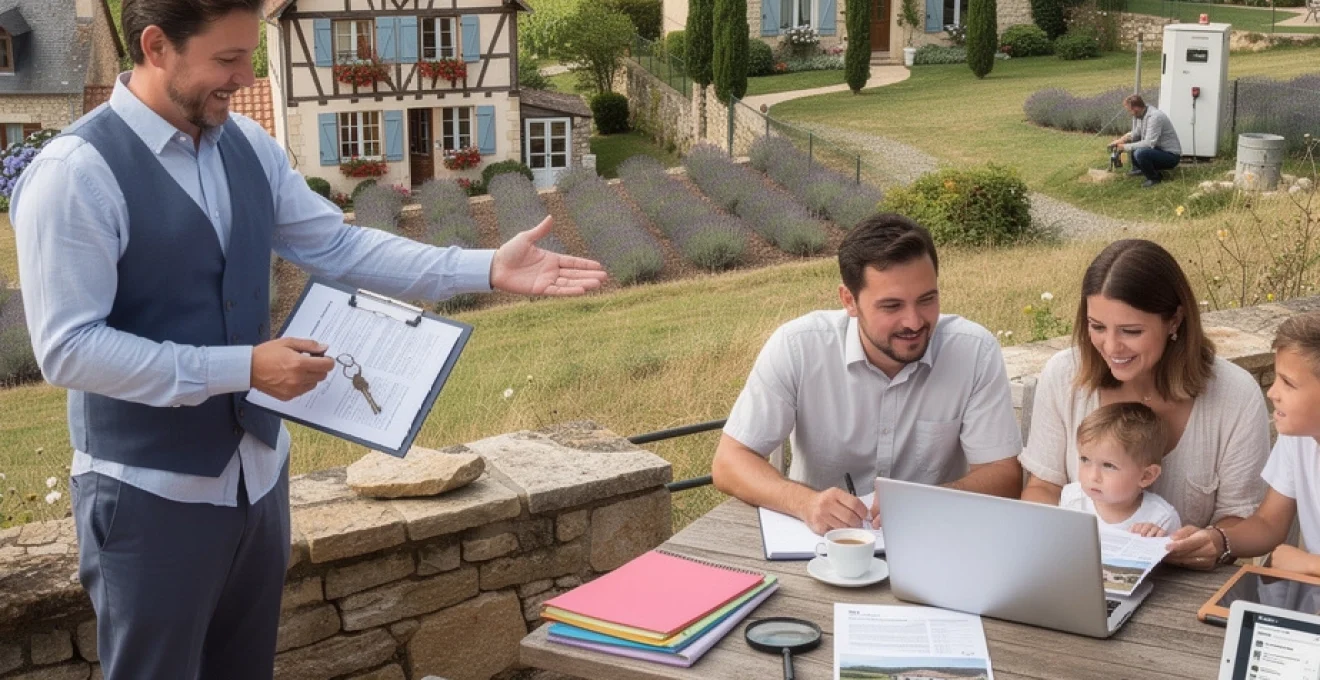
France’s countryside accommodation scene offers an extraordinary tapestry of traditional dwellings that transform ordinary holidays into immersive cultural experiences. From medieval stone cottages nestled in Dordogne valleys to sun-drenched mas provençal estates surrounded by lavender fields, French cottage holidays provide unparalleled authenticity that standard hotel stays simply cannot match. The self-catering accommodation sector has evolved significantly over the past decade, with property standards rising dramatically while maintaining the rustic charm that draws millions of visitors annually to rural French destinations.
Understanding the intricacies of cottage rental systems, regional variations, and essential booking considerations can mean the difference between a memorable holiday and a disappointing experience. The French cottage rental market operates under specific classification systems and regulatory frameworks that savvy travellers must navigate to secure premium properties at competitive rates. With over 55,000 registered gîtes across France’s diverse départements, selecting the perfect cottage requires strategic planning and insider knowledge of regional tourism patterns.
Regional cottage accommodation types across french départements
France’s diverse regional architecture creates distinctly different cottage experiences depending on your chosen département. Each region has developed unique accommodation styles that reflect local building materials, historical influences, and climate considerations. Understanding these regional variations allows travellers to select properties that align perfectly with their aesthetic preferences and functional requirements.
Gîtes de france classification system and quality standards
The Gîtes de France network represents the most established cottage rental classification system, operating since 1951 with rigorous quality standards. Properties receive ratings from one to five épis (ears of wheat), with each level demanding specific amenities and service standards. Three-épi properties typically feature modern kitchens, comfortable furnishings, and reliable heating systems, while five-épi accommodations offer luxury amenities including pools, premium linens, and concierge services.
Property inspections occur annually, ensuring standards remain consistent across the network’s 42,000 registered accommodations. The classification system evaluates comfort levels, equipment quality, cleanliness standards, and environmental settings. Higher-rated properties command premium rates but deliver exceptional experiences that justify the investment for discerning travellers seeking guaranteed quality assurance.
Chambres d’hôtes vs Self-Catering cottage distinctions
Many travellers confuse chambres d’hôtes with self-catering cottages, yet these accommodation types serve distinctly different purposes. Chambres d’hôtes operate as French bed-and-breakfast establishments where hosts provide rooms within their primary residence, often including breakfast and evening meals. Self-catering cottages offer complete independence with fully equipped kitchens, private entrances, and minimal host interaction unless specifically requested.
Cottage rentals typically require minimum stays of three to seven nights, particularly during peak seasons, while chambres d’hôtes accommodate shorter stays. The choice between these options depends largely on your desire for social interaction versus privacy, with cottages appealing to families and groups seeking autonomous holiday experiences.
Mas provençal properties in vaucluse and Bouches-du-Rhône
Traditional Provençal farmhouses, known as mas, represent the epitome of southern French cottage accommodation. These stone structures feature distinctive architectural elements including clay tile roofs, thick walls for temperature regulation, and expansive terraces designed for outdoor living. Original mas properties often include olive groves, vineyards, or lavender fields, creating authentic rural environments that embody the Provençal lifestyle.
Modern mas renovations incorporate contemporary amenities while preserving historical character through exposed stone walls, wooden beam ceilings, and traditional pottery decorations. Many properties feature swimming pools, outdoor kitchens, and landscaped gardens that extend living spaces into the Mediterranean climate. Rental rates for premium mas properties range from €150 to €500 per night depending on size, location, and amenity levels.
Breton stone cottages in finistère and morbihan
Brittany’s granite cottages offer distinctly different experiences from their southern counterparts, featuring robust stone construction designed to withstand Atlantic coastal weather. Traditional Breton cottages showcase thick walls, small windows, and steep slate roofs that create cosy interior atmospheres perfect for coo
y evenings and stormy winter days. Interiors frequently combine whitewashed walls with exposed beams and traditional Breton furniture, creating an atmosphere that feels both timeless and welcoming.
In Finistère and Morbihan, many renovated stone cottages are clustered in former fishing villages or inland hamlets close to chapels and calvaries. Coastal properties may offer direct access to the GR34 coastal path, making them ideal for walking holidays and cottage stays focused on outdoor activities. Travellers should be aware that many Breton cottages retain their smaller original windows and compact rooms, which add charm but can reduce natural light compared with more modern builds.
Alsatian half-timbered houses in haut-rhin region
In eastern France, the Haut-Rhin and neighbouring Bas-Rhin départements are renowned for their colourful half-timbered houses that line the wine route villages. These Alsatian cottages, often dating back several centuries, feature exposed timber frames infilled with wattle and daub, brightly painted façades, and flower-laden balconies. Staying in such a property places you in the architectural heart of villages like Riquewihr, Eguisheim, or Kaysersberg, where cobbled streets and traditional winstubs are just steps away.
Inside, half-timbered holiday cottages typically offer low ceilings, creaking wooden floors, and deep window seats that overlook village squares or vineyards. Modern renovations usually integrate efficient insulation and double glazing while preserving original carpentry, panelled walls, and tiled stoves. Because of their historic structure, room layouts can be irregular, so if you require full step-free access or extra-large bedrooms, it is worth confirming the floor plan with the owner before booking your Alsatian cottage stay.
Pre-booking research and property verification protocols
Thorough pre-booking research is essential for any cottage holiday in France, particularly when you are committing to a week or more in a rural area. Unlike standard hotels, self-catering properties vary widely in quality, equipment, and compliance with local regulations. By following structured verification protocols, you significantly reduce the risk of unpleasant surprises and increase your chances of finding a cottage that precisely matches your expectations.
Think of this stage as due diligence on your future holiday: a blend of regulatory checks, quality-label verification, and practical research into pricing and guest feedback. Investing an extra hour at this point often saves you days of frustration later, especially in peak season when alternative accommodation may be scarce.
ATOUT france tourism classification verification
ATOUT France, the country’s official tourism development agency, operates a national classification system for furnished tourist accommodation known as meublés de tourisme. Properties that opt into this voluntary scheme receive between 1 and 5 stars based on comfort, facilities, and customer service criteria. When you see a cottage advertised as “classé 3 étoiles ATOUT France”, you know it has undergone an independent assessment valid for five years.
Before confirming a booking, you can ask the owner for their official classification certificate number and the year of the last inspection. Some local tourism offices provide online databases where you can cross-check this information. While many excellent cottages are not formally classified, verified ATOUT France status gives you an extra layer of assurance regarding minimum surface areas, equipment lists, and safety requirements such as smoke detectors and secure staircases.
Clévacances quality label assessment criteria
Alongside Gîtes de France, Clévacances is one of the major national quality labels for holiday rentals and guest rooms. Properties are rated from 1 to 5 “clé” (keys), with each level reflecting comfort, décor, amenities, and overall guest experience. Clévacances inspections pay particular attention to bedding quality, sound insulation, bathroom standards, and the general state of maintenance—elements that can make or break a self-catering stay.
When evaluating a Clévacances-listed cottage, look for recent inspection dates and check whether the rating applies to the entire property or only part of it (for example, one wing of a larger house). On the label’s website, you can typically access detailed descriptions and multiple photos that must conform to strict presentation rules, reducing the risk of misleading advertising. If you are hesitating between two similar cottages, choosing the one with a recognised quality label is often the safer option for a stress-free French cottage holiday.
Property management company due diligence checks
Many cottage owners in France entrust bookings and guest services to local property management companies or specialist rental agencies. While this can be a positive sign of professionalism, it is wise to perform your own checks on the intermediary. Start by reviewing independent online feedback, both on the company itself and on individual properties they manage. Repeated complaints about poor communication or unresolved maintenance issues should raise a red flag.
You can also verify whether the agency holds a valid French professional card for real estate and holiday rentals (carte professionnelle) and whether they belong to a recognised trade body. When corresponding with the agency, note how promptly and clearly they respond to detailed questions about heating, internet, or accessibility. A transparent company will readily provide utility information, floor plans, and copies of house rules, helping you book your cottage with confidence.
Seasonal pricing analysis and dynamic rate monitoring
Cottage holiday prices in France fluctuate significantly according to region, season, and local events. High summer weeks in coastal Brittany or Provence can be three to four times more expensive than shoulder-season stays, while Christmas and New Year bring peak pricing to mountain and city locations. To avoid overpaying, it is worth monitoring rates over several weeks and comparing at least three similar properties in the same area.
Many professional hosts now use dynamic pricing tools that adjust nightly rates based on demand, booking pace, and competitor availability, much like airline tickets. As a guest, you can turn this to your advantage by being flexible: midweek arrivals, shoulder-season dates, or filling small gaps in the booking calendar often unlock more favourable pricing. Keeping a simple spreadsheet of properties, dates, and total costs (including cleaning and heating fees) helps you identify genuine value rather than being seduced by low headline rates that balloon once extras are added.
Essential documentation and legal requirements for cottage rentals
Even though you are booking a holiday rather than buying property, there are several legal and administrative points to understand before confirming a French cottage rental. First, ensure you receive a written rental contract (contrat de location saisonnière) that clearly outlines dates, total price, deposit amount, cancellation conditions, maximum occupancy, and any additional charges such as linen hire, heating, or end-of-stay cleaning. This contract should also state whether a security deposit (caution) is required and within what timeframe it will be returned after your departure.
Owners who rent regularly are obliged to declare their activity to the local town hall (mairie) and, in many communes, to collect a tourist tax (taxe de séjour). You will usually see this charge itemised separately on your invoice, either as a per-person, per-night fee or included in the overall rate. For your own protection, it is helpful to confirm that the property is insured for holiday rentals and that public liability insurance covers guests in case of accidents on the premises. If you are travelling with children, ask specifically about pool security measures, stair gates, and smoke detectors to ensure compliance with French safety regulations.
Strategic location selection based on regional tourism patterns
Choosing the right location for your cottage holiday in France goes far beyond picking a picturesque village on a map. Tourism patterns fluctuate by month, region, and even day of the week, influencing everything from traffic levels and restaurant availability to the atmosphere in local markets. For example, a vineyard village in the Languedoc may feel sleepy in January but become a lively hub in August when festivals and night markets take place.
When planning, consider how you prefer to spend your days: are you seeking easy access to beaches, hiking trails, ski slopes, or cultural sites such as châteaux and Roman ruins? Analysing regional tourism websites and local event calendars can reveal whether your chosen dates coincide with major festivals, wine harvests, or sporting events that might either enhance your stay or create crowds and noise. Proximity to transport hubs also matters: being within 30–40 minutes of a TGV station or motorway junction can make arrival and day trips far simpler, especially if you are travelling with children or older relatives.
Property amenity assessment and rural infrastructure considerations
One of the key differences between a city apartment and a rural French cottage lies in the surrounding infrastructure. In remote hamlets, services you might take for granted—such as mains drainage, high-speed internet, or daily public transport—may be limited or absent. Understanding these constraints before booking allows you to choose a cottage whose amenities align with your lifestyle and work commitments, particularly if you plan to combine holiday time with remote working.
It can help to think in terms of “self-sufficiency”: how far is the nearest supermarket, pharmacy, or emergency medical centre, and how comfortable are you driving country roads after dark? Clarifying these practicalities with the owner ensures that the rustic charm of your French holiday cottage does not come at the cost of essential convenience.
Septic system functionality and water quality testing
Many countryside cottages in France are not connected to mains drainage and instead rely on individual septic systems (fosse septique). A well-maintained system should be invisible to guests, but poorly managed installations can lead to odours, slow drains, or in extreme cases, backflow issues. When booking a rural property, you can discreetly ask when the septic system was last inspected and emptied, and whether it complies with the local sanitation authority’s (SPANC) regulations.
Water quality is another key consideration, especially if you are staying with young children or plan extended cottage holidays in France. Most rural homes are connected to municipally controlled water networks that meet EU standards, but some isolated properties still use wells or natural springs. In such cases, ask the owner whether the water is certified potable and whether recent laboratory tests are available. If in doubt, you can always rely on bottled water for drinking while still using the tap water for cooking and washing.
Internet connectivity solutions in remote french villages
As idyllic as a stone cottage at the end of a country lane may sound, internet connectivity can quickly become a decisive factor, especially if you need to work remotely or stay in touch with family. Standard ADSL lines in remote villages may deliver only modest speeds, and mobile coverage can vary drastically between providers. Before booking, ask the owner for concrete details: average download/upload speeds, network operator, and whether the connection is fixed-line, 4G box, or satellite-based.
If connectivity is critical for you, consider bringing a back-up solution such as a 4G or 5G mobile hotspot with a French or EU SIM card, checking coverage maps in advance for your chosen département. Some hosts now advertise “digital nomad friendly” cottages with dedicated workspaces and reinforced Wi-Fi, but it is still wise to verify specifics rather than relying on generic claims. That way, you can enjoy the tranquillity of rural France without sacrificing your ability to join a video call or stream a film on a rainy evening.
Heating system efficiency in period properties
Historic cottages in France often feature thick stone walls, open fireplaces, and charming but ageing radiators. While these elements add character, they can present challenges in shoulder seasons and winter if the heating system is underpowered or poorly maintained. To avoid shivering under antique beams, inquire about the primary heating source: is it oil-fired central heating, modern heat pumps, electric radiators, or wood-burning stoves supplemented by convectors?
Ask whether the rental price includes heating or if additional charges apply, particularly for longer low-season stays. Efficient systems combined with good insulation will keep interior temperatures comfortable without excessive energy use, making your French cottage holiday enjoyable even when temperatures drop outside. Just as importantly, clear instructions for operating boilers, thermostats, or pellet stoves should be available in the welcome booklet so you can regulate the temperature safely and confidently.
Kitchen equipment standards and safety certifications
A major advantage of self-catering cottages over hotels is the ability to cook and share meals using local produce from markets and farm shops. However, the quality and completeness of kitchen equipment varies widely in French holiday rentals. When reviewing listings, look for detailed inventories that mention not just the presence of a kitchen, but specific items such as an oven, microwave, dishwasher, sharp knives, child-friendly tableware, and adequate pans for the size of your group.
From a safety perspective, you may also want to ask whether electrical appliances carry CE markings, how recently they were inspected, and whether residual-current devices (disjoncteurs différentiels) protect the circuits. Clear labelling of gas shut-off valves, fire blankets, and extinguishers is another sign of a professionally managed cottage. Well-equipped, compliant kitchens not only make self-catering more enjoyable but also reduce the risk of accidents in unfamiliar surroundings.
Cultural etiquette and local integration strategies for holiday cottage guests
One of the greatest rewards of staying in a French cottage rather than a resort is the opportunity to integrate—albeit temporarily—into village life. Simple gestures can transform you from anonymous tourist into welcomed guest, enriching your experience and opening doors to recommendations you would never find in a guidebook. Learning a handful of basic French phrases, greeting shopkeepers with a warm “Bonjour, Madame/Monsieur”, and respecting local mealtimes are small steps that make a big difference.
Noise etiquette is particularly important in rural communities, where neighbours may live close by and value tranquillity. Keeping outdoor music at reasonable levels, observing quiet hours after 22:00, and parking considerately all signal respect for the community hosting your holiday. You might also choose to support local businesses by buying bread from the village boulangerie, visiting weekly markets, or booking a table at nearby family-run restaurants instead of driving to large supermarkets or chains in the next town.
If you are staying several weeks, consider participating in local events advertised at the mairie or on village noticeboards: open-air concerts, producers’ markets, or pétanque tournaments often welcome visitors. By approaching these moments with curiosity rather than entitlement, you will find that many locals are delighted to share stories about their area, recommend hidden swimming spots, or explain regional dishes. In return, leaving the cottage clean, following recycling rules, and providing thoughtful feedback to the owner contribute to a virtuous circle where respectful guests are always welcome back to their chosen corner of rural France.