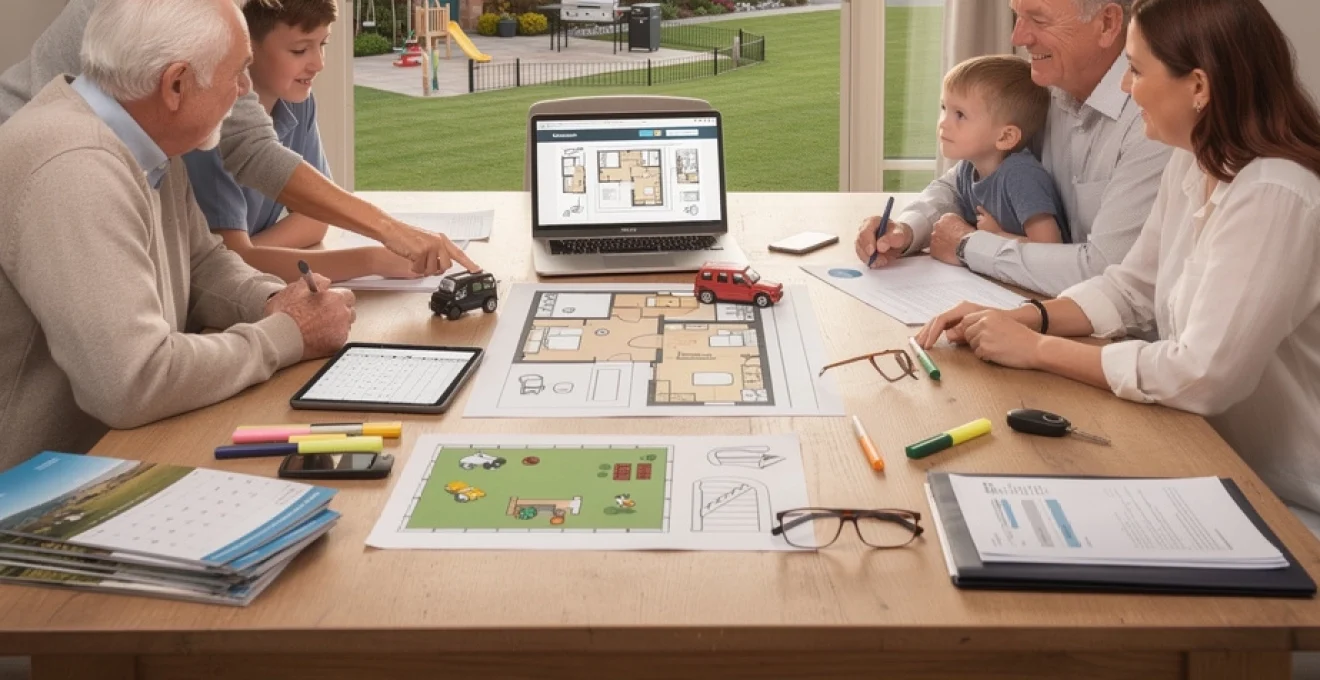
The art of selecting the ideal cottage rental for a family holiday requires careful consideration of numerous factors that extend far beyond simply finding accommodation. Modern families, particularly those spanning multiple generations, face unique challenges when attempting to coordinate group travel that satisfies everyone’s needs whilst maintaining comfort, safety, and enjoyment for all participants. The complexity increases exponentially when considering the diverse requirements of grandparents, parents, teenagers, and young children all sharing the same space for an extended period.
Recent data from the UK holiday rental industry indicates that family bookings account for approximately 68% of all cottage rentals, with multi-generational trips representing the fastest-growing segment in domestic tourism. This surge in family-focused travel has prompted property owners and rental agencies to adapt their offerings, creating more sophisticated accommodation options that cater specifically to large groups with varying needs and expectations.
Cottage property selection criteria for Multi-Generational family groups
Selecting appropriate accommodation for multi-generational families requires a systematic approach to evaluating properties against specific criteria that address the diverse needs of different age groups. The complexity of these requirements often surprises first-time family group organisers, who may underestimate the importance of factors such as mobility accessibility, privacy considerations, and communal space dynamics.
Bedroom configuration assessment: master suites, twin rooms, and accessibility features
The bedroom layout of a family cottage rental can make or break the entire holiday experience. Properties must accommodate varying privacy needs, with grandparents typically requiring quiet master suites away from children’s areas, whilst parents need proximity to younger family members for overnight supervision. Ground-floor bedroom availability becomes crucial for elderly family members or those with mobility challenges, eliminating the need for stair navigation during night-time hours.
Twin room configurations offer flexibility for children who may prefer separate beds whilst sharing space with siblings or cousins. The ideal family cottage provides a mixture of double rooms, twin options, and potentially bunk bed arrangements to maximise occupancy whilst maintaining comfort. Accessibility features such as wider doorways, grab rails in bathrooms, and level access shower facilities should be prioritised when elderly relatives are part of the group.
Kitchen facility requirements: Industrial-Grade appliances and extended counter space
The kitchen often serves as the heart of family cottage holidays, requiring robust facilities capable of handling meal preparation for large groups. Standard domestic appliances frequently prove inadequate for families of twelve or more, necessitating properties equipped with commercial-grade ovens, multiple hobs, and substantial refrigeration capacity. Extended counter space becomes essential for simultaneous meal preparation activities, allowing multiple family members to contribute to cooking duties without creating chaos.
Storage considerations extend beyond standard cupboard space to include adequate refrigeration for multiple families’ provisions, separate freezer compartments for longer stays, and sufficient crockery and cutlery to serve large groups without constant washing requirements. Dishwashing facilities must accommodate the volume of items generated by family meals, with many successful family rentals featuring commercial-style dishwashers or multiple standard units.
Garden and outdoor space evaluation: private grounds, BBQ areas, and Child-Safe boundaries
Outdoor space quality significantly impacts the success of family cottage holidays, particularly when accommodating children who require safe areas for play and exploration. Private gardens with secure boundaries allow parents to relax whilst children enjoy outdoor activities without constant supervision concerns. The presence of dedicated barbecue areas enhances the social aspect of family gatherings, providing focal points for outdoor dining and evening entertainment.
Garden furniture capacity must match the property’s sleeping arrangements, ensuring adequate seating for all guests during outdoor meals and relaxation periods. Additional features such as play equipment, hot tubs, or swimming pools can justify premium pricing whilst providing entertainment options that reduce the need for constant external activities. Safety considerations include secure fencing around water features, non-slip surfaces around pool areas, and adequate lighting for evening use.
Parking infrastructure analysis: multiple vehicle accommodation and trailer storage
Parking requirements for large family groups often exceed typical cottage provisions, with multiple vehicles becoming necessary to transport extended families to holiday destinations. Properties must provide secure parking for several cars, ideally with designated spaces that prevent the need for constant vehicle shuffling throughout the stay. Trailer and motorhome storage capabilities
Trailer and motorhome storage capabilities become increasingly relevant for families travelling with additional sports equipment, boats, or mobility aids. When reviewing a potential cottage rental for families, check not only the number of spaces but also turning circles, surface quality (gravel vs tarmac), lighting, and security measures such as gates or CCTV. Properties on narrow country lanes may require careful arrival planning, especially for roof boxes or bike racks. Clarifying parking arrangements in advance reduces arrival stress and helps you allocate vehicles sensibly between different households in your group.
Peak season booking strategies for premium UK cottage destinations
Competition for high-quality cottage rentals for families intensifies during peak seasons, particularly in sought-after regions such as Cornwall, the Lake District, Devon, and the Cotswolds. Premium properties with hot tubs, sea views, or direct access to walking trails are often fully booked well before the school holidays begin. To secure the right configuration for a multi-generational group, you need to treat the booking process less like a last-minute holiday search and more like project management for a complex event.
Early reservation protocols: 12-month advance booking windows for cornwall and lake district
In leading UK cottage destinations, early booking is no longer simply advisable; it is practically mandatory for larger family groups. Data from several national agencies suggests that up to 60% of peak summer inventory in Cornwall and the Lake District is reserved 10–12 months in advance. For high-capacity cottages (sleeping 10+), that percentage is often even higher, as fewer properties can accommodate these numbers comfortably.
Families planning key events such as milestone birthdays, golden anniversaries, or multi-generational reunions should aim to confirm their cottage rental at least a year in advance, especially if they require specific features such as ground-floor bedrooms or dog-friendly policies. Treat the booking date as you would a wedding venue: agree a shortlist of possible weeks, check school term times across different regions, and gather commitment from all households before paying the deposit. Where possible, join agency mailing lists to receive early access notifications for newly released calendar dates.
Dynamic pricing models: understanding rate fluctuations during school holidays
Many cottage owners now use dynamic pricing models similar to airlines and hotels, adjusting nightly rates based on demand, lead time, and occupancy. Prices for a family cottage rental can rise significantly during school holidays, bank holiday weekends, and local event periods such as festivals or sporting fixtures. Understanding these patterns allows you to choose dates more strategically and avoid paying unnecessary premiums.
As a rule of thumb, the highest rates apply to late July and August, followed by May half-term, Easter, and the Christmas–New Year period. If your children are not yet at school, or if you are coordinating adult-only groups within the extended family, consider travelling during June or early July, when weather conditions can be similar but prices may be 20–30% lower. For school-age families locked to peak dates, booking early and considering slightly less well-known coastal or rural areas can offer better value without compromising on cottage quality.
Cancellation insurance options: comprehensive coverage for family emergency scenarios
When multiple generations are involved, the probability of illness, bereavement, or other unforeseen events increases, making cancellation protection a crucial element of planning. Rather than treating travel insurance as an afterthought, build it into your budget from the outset and ensure that the policy covers the full rental cost of your chosen cottage. Many providers now offer “enhanced cancellation cover” that includes family emergencies, jury service, or redundancy.
Review policy wording carefully, paying attention to pre-existing medical conditions, the definition of “close family member”, and any exclusions for pandemics or government restrictions. Some rental agencies also offer their own optional cancellation waivers; whilst convenient, these may provide more limited cover than a standalone policy. Ask yourself: if the worst happened two days before departure, would your current arrangements protect the significant investment your wider family has made in this holiday?
Alternative date flexibility: Mid-Week and shoulder season availability optimisation
Flexibility with arrival and departure days can unlock better-quality cottages at more favourable rates. Increasingly, owners are offering short breaks and mid-week stays outside the peak weeks, enabling families to secure premium properties at a fraction of the high-season cost. For example, two mid-week stays in May and October may deliver more total family time for less than a single week in August.
If grandparents are retired and parents can negotiate remote working or time off at quieter times, targeting shoulder seasons (April–early June and September–October) can be highly cost-effective. Weather in coastal and countryside regions can still be pleasant, attractions are less crowded, and you may benefit from complimentary extras such as early check-in or discounted local activities. When comparing options, calculate the cost per person per night rather than headline weekly rates; you may find that a higher-spec cottage in shoulder season represents better overall value than a basic property at peak times.
Safety compliance and risk management for family cottage rentals
Safety considerations for a family cottage rental go far beyond checking for smoke alarms and fire extinguishers. When grandparents, toddlers, and teenagers share the same environment, you must evaluate risk across multiple dimensions: fire safety, child-proofing, water hazards, and accessibility. In the UK, professional holiday lets must comply with regulations covering fire risk assessments, gas safety checks, and electrical inspections, but levels of implementation and communication can vary between properties.
Before booking, examine photographs and descriptions for potential hazards such as open staircases, unfenced ponds, low window guards, or steep garden drops. On arrival, perform a quick “safety walk-through” just as you would with a new home: identify exit routes, locate fire blankets and extinguishers, and assess how easily small children could access kitchens, balconies, or outdoor areas. If the cottage includes features such as wood-burning stoves, hot tubs, or swimming pools, confirm that operating instructions and safety guidelines are clearly displayed and that any necessary covers, gates, or locks are present and functional.
Risk management also involves setting clear family rules. Agree in advance how you will supervise children in and around water, what time outdoor noise should reduce to respect neighbours, and who is responsible for locking doors and gates at night. For multi-generational groups, it can be helpful to assign specific adults to “lifeguard duty” during pool use or to rotate responsibility for bedtime checks. By approaching safety proactively rather than reactively, you convert potential points of stress into a calm, shared understanding that allows everyone to relax.
Technology integration and modern amenity expectations
While the appeal of a cottage rental for families often lies in its rural charm or coastal seclusion, modern travellers increasingly expect a baseline level of technology and digital connectivity. Reliable high-speed Wi-Fi is no longer a luxury but an essential amenity, supporting everything from remote work and streaming entertainment to online learning and route planning. Families should verify internet speed and coverage in advance, especially in remote locations where mobile data may be limited.
Smart TVs, streaming services, and Bluetooth speakers allow different generations to enjoy entertainment without competing for a single screen or fighting with unfamiliar devices. For teenagers, a strong Wi-Fi signal and a quiet corner can be as vital as a comfortable bed; for grandparents, simple remote controls and clear instructions ensure that technology enhances rather than complicates their stay. Think of it as digital infrastructure: invisible when it works well, but disruptive if neglected.
Some higher-end family cottages now incorporate smart home features such as app-controlled heating, EV charging points, and keyless entry systems. These can greatly improve convenience, particularly for staggered arrivals or late-night check-ins, but they also require clear guidance. Look for properties that provide concise, printed instructions for each system rather than relying solely on digital manuals buried in email chains. When technology is thoughtfully integrated, it supports the core purpose of your holiday: spending quality time together without being distracted by avoidable frustrations.
Local activity coordination and experience planning frameworks
Securing the right cottage rental for families is only the first step; the surrounding experiences will shape how the holiday is remembered. Multi-generational trips benefit most from a balanced itinerary that combines shared activities with pockets of independent exploration and rest. Rather than attempting to schedule every hour, adopt a planning framework that identifies key anchor experiences, flexible options for different age groups, and indoor back-ups for poor weather.
Age-appropriate attraction mapping: national trust properties and adventure parks
One effective approach is to map attractions by age suitability and energy level. Younger children may thrive in interactive farm parks and adventure playgrounds, while teenagers may prefer high-ropes courses, surf lessons, or zip lines. Grandparents often enjoy historic houses, gardens, and scenic walks with well-maintained paths and accessible facilities. Fortunately, the UK offers a vast network of National Trust and English Heritage properties, many of which combine level paths, cafés, and play areas within a single visit.
Before travelling, create a simple table or shared document listing 5–10 potential days out within a 60–90 minute radius of your cottage. For each, note driving times, accessibility details, typical visit duration, and any booking requirements. This attraction map acts like a menu: each day, you can select options that fit current weather conditions, energy levels, and interests. Not everyone has to do the same thing; one subgroup may head to a stately home and tea room while another tackles an adventure park, before reconvening in the evening to share stories over dinner.
Weather contingency activity portfolios: indoor alternatives and rainy day solutions
In the UK, planning a family cottage rental without a wet-weather strategy is inviting disappointment. Rainy days can quickly become flashpoints for boredom and frustration unless you have a portfolio of indoor alternatives ready. When assessing potential cottages, consider the quality of indoor communal spaces: is there enough seating for everyone to watch a film together, play board games, or read quietly? Are there games rooms, covered outdoor areas, or cosy snug rooms that can be “zoned” for different activities?
Compile a list of nearby indoor attractions before you arrive: museums with child-friendly exhibits, aquariums, swimming pools, climbing centres, or even local cinemas. At the same time, prepare a small “rainy day kit” to bring with you—compact board games, puzzles, craft supplies, or a streaming account loaded with downloaded content. Think of this as weather insurance: a modest upfront investment that can save the day when the forecast turns. By treating bad weather as an alternative adventure rather than a setback, you maintain positive momentum and avoid cabin fever.
Transportation logistics: car rental coordination and public transport access
Transport logistics often determine how easily your family can take advantage of local activities. In rural cottage destinations, private cars remain the most flexible option, but you still need to consider parking, fuel costs, and designated drivers for evening outings. For families arriving by train or plane, car rental coordination becomes a key planning task: ensure that vehicles are large enough for luggage, pushchairs, and mobility aids, and that the rental depot’s opening hours match your arrival times.
In some regions, public transport can form part of the holiday experience rather than a backup plan. Heritage railways, open-top coastal buses, and local ferries can be exciting for children whilst relieving adults from constant driving duties. When reviewing a cottage’s location, check access to bus routes, railway stations, and taxi services, particularly if some family members may want to explore independently. Clear directions and parking instructions, ideally shared with all drivers before departure, reduce the risk of stressful arrivals on narrow lanes after dark.
Dining reservation management: Family-Friendly restaurants and grocery delivery services
Food planning can either streamline your holiday or dominate it. A cottage rental for families usually involves a mix of self-catering and local dining, especially for larger groups where eating out every night would be prohibitively expensive. Before your trip, identify a shortlist of family-friendly restaurants, pubs, and cafés within a 30-minute radius, paying attention to group booking policies, children’s menus, and accessibility. Many popular venues in coastal and national park locations require reservations well in advance for peak evenings.
To reduce the pressure of the first 24 hours, consider arranging a supermarket delivery for the day of arrival, timed after your expected check-in. Most major grocers deliver to rural areas, but you may need to provide detailed directions or a what3words location. Agree a basic meal plan for the week—perhaps two meals out, two barbecue evenings, and three simple family dinners—to guide your shopping list. This approach avoids overbuying perishables and ensures that different dietary requirements are considered from the outset, rather than becoming a source of tension mid-week.
Budget allocation models and Cost-Effective resource management
Effective budgeting for a cottage rental for families requires more than dividing the weekly rate by the number of guests. Multi-generational trips involve layered costs: accommodation, transport, food, activities, insurance, and contingency funds. Without a clear allocation model, there is a risk that one household shoulders a disproportionate share of expenses or that financial tensions overshadow the enjoyment of the holiday itself.
Start by establishing a transparent framework for splitting the core rental cost. Some families opt for a simple per-room or per-household division, while others calculate contributions based on the number of occupants or length of stay if arrivals and departures are staggered. Whatever method you choose, confirm it in writing—an email or shared document—so that expectations are aligned. For shared food and drink, consider a communal kitty for basics (breakfast items, snacks, household supplies) while allowing each household to fund any speciality items or separate meals out.
To manage overall expenditure, construct a basic holiday budget with defined categories and caps. For example, you might allocate a specific amount per day for paid activities, with free or low-cost options (beaches, walks, playgrounds) filling the remaining time. Building in a contingency buffer of 10–15% covers unplanned costs such as extra fuel, parking fees, or last-minute attractions that catch everyone’s interest. By approaching finances with the same structured mindset you apply to property selection and safety, you support a relaxed atmosphere where conversation can focus on shared experiences rather than money worries.